REVIEW · KAMPALA
15-Day Gorilla and chimps Trekking, Big 5 and Nature Sighting Safari
Book on Viator →Operated by Ngoni Safaris Uganda · Bookable on Viator
Big forests, bigger primates, and clear planning.
This private 15-day Uganda safari strings together Uganda’s top wildlife stops from Kampala, mixing gorilla trekking and chimp trekking with game drives, boat time, and forest walks. You get a full rhythm of Uganda’s ecosystems, from rhino country and river rapids to crater lakes and savanna plains.
Two things I like a lot. First, you’re traveling with a private guide, and past guests specifically name people like Allan and James as standouts—useful when you want your days to feel intentional, not random. Second, you’re not juggling a bunch of separate vendors for the basics because meals, accommodation, transfers, and activities are built into the plan.
One drawback to consider: the schedule is active. Expect early starts and at least a couple of strenuous moments (like gorilla tracking and major viewpoint hikes), plus driving days that can feel long depending on road conditions.
In This Review
- Key highlights I’d plan around
- Entebbe to Mabamba Swamp: your Uganda “warm-up” day
- Big Five-style odds at Murchison Falls and Ziwa Rhino Sanctuary
- Boat safari under the falls (and the option to work for it)
- Kibale Forest: your chimp trekking day starts with a briefing
- Two ways to see Kibale: viewpoint hike and forest time in Bigodi
- Queen Elizabeth National Park: Kazinga Channel and crater viewpoints
- Ishasha tree-climbing lions: the special chapter
- Getting ready for mountain gorillas: Bwindi transfer and the mental switch
- Gorilla trekking in the forest sanctuary: what to expect up close
- Batwa trail and Lake Bunyonyi: switching from forest effort to lake calm
- Lake Mburo: hyenas at dawn and hilltop views
- Price and logistics: what you’re paying for (and what you should watch)
- Who this safari is best for
- Should you book this 15-day Uganda primate and safari circuit?
- FAQ
- What city is the safari based in?
- How long is the safari?
- Is this a private tour?
- What’s included for meals and drinks?
- Does the tour offer pickup?
- Where does the tour end?
- What is the cancellation deadline for a full refund?
Key highlights I’d plan around
- Private guide time so your questions and pacing are handled daily (not just at dinner).
- Gorilla trekking plus chimp trekking gives you both Uganda’s iconic primate experiences in one circuit.
- Murchison Falls + Ziwa Rhino Sanctuary is a strong Big Five-style setup, including an hour of rhino tracking.
- Kazinga Channel boat safari puts hippos and crocs on full display from the water.
- Ishasha tree-climbing lions adds the chance of a very specific wildlife behavior, not just a generic drive.
- Lake Mburo morning walk with an armed UWA ranger for close, early wildlife action.
Entebbe to Mabamba Swamp: your Uganda “warm-up” day
Most Uganda safaris start with a fast airport-to-hotel transition, and this one follows that pattern smoothly. You’re met at Entebbe International Airport by a Ngoni Safaris Uganda representative, then transferred to accommodation in the Kampala area. If you land early, you may have time for a late-afternoon ride around Kampala; otherwise you’ll settle in, eat well, and sleep ready for wildlife the next morning.
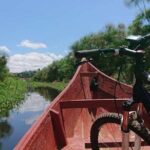
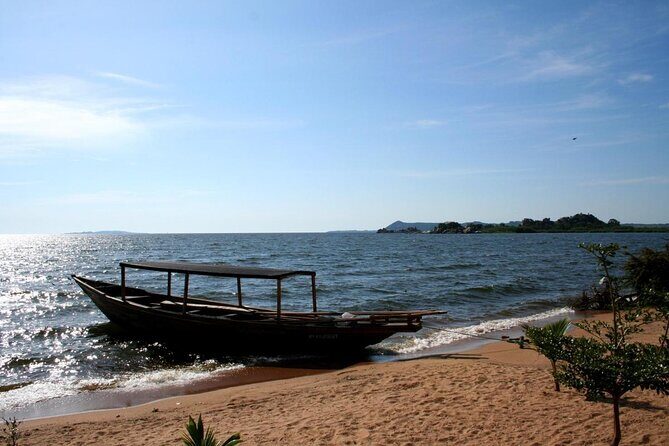
The nice touch is how the first wildlife moment isn’t forced to wait. Near Entebbe, you’ll head to Mabamba Swamp for shoebill birdwatching. If you’ve never targeted shoebills before, this is one of the most logical places to try: you’re in the right habitat from the start, and the experience is very purpose-driven rather than sightseeing-by-accident. It’s also a good way to get your eyes tuned for Uganda’s bird life before the bigger mammal days begin.
A practical note: birdwatching is usually more about patient scanning than running around with a camera. Bring binoculars if you have them (and if you don’t, you’ll still be able to enjoy it, but you’ll see more with glasses).
You can also read our reviews of more hiking tours in Kampala

Big Five-style odds at Murchison Falls and Ziwa Rhino Sanctuary
When people say Uganda is wildlife-rich, the best proof is how quickly the safari starts delivering real animal variety. After breakfast, you’ll drive to Murchison Falls National Park, where the highlight isn’t just “seeing animals.” It’s the mix of habitats: savannah plains, Nile river energy, and lots of water-focused wildlife.
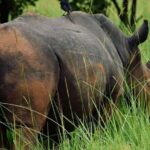
This is also where your rhino plan starts. On the way, you visit Ziwa Rhino Sanctuary for about an hour of rhino tracking. Even if rhinos aren’t visible the whole time (wildlife never guarantees a perfect sighting), having dedicated tracking time is a big advantage over a quick, stop-and-go photo moment.
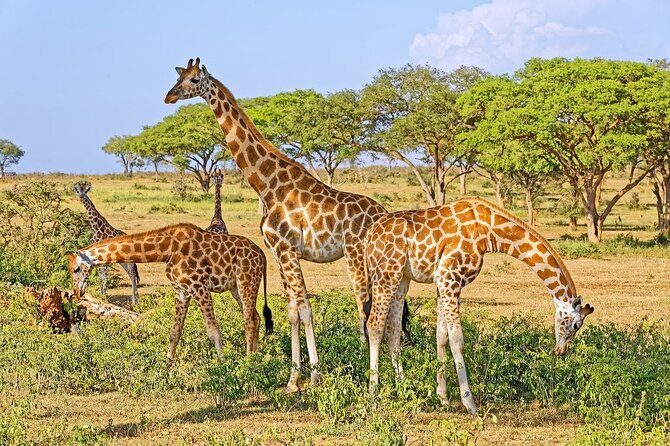
In Murchison Falls, your game viewing options include lions, giraffes, hartebeest, buffalo, elephants, hippos, and Nile crocodiles—plus bird life. The park is noted for an impressive number of bird species, and it’s mentioned as a place where shoebill and other rarer birds can show up. That matters because it changes the feel of the day: you’re not only chasing mammals, you’re getting a full ecosystem experience.
Two ways this stop can go well for you:
- You’ll have time for both early morning viewing and a later water-focused portion.
- You’re building confidence in wildlife timing early in the trip, so later days feel more relaxed.
Boat safari under the falls (and the option to work for it)
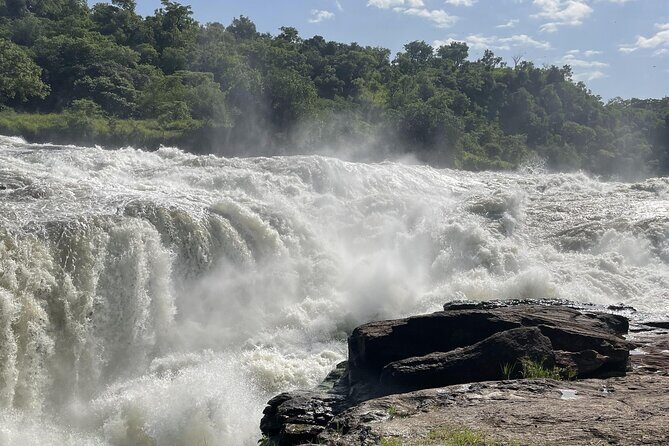
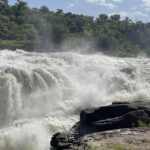
One of the most memorable Murchison Falls experiences is the boat trip to the base of the falls. You’ll be in a very different “wildlife zone” than the plains: the river pulls your attention toward hippos, crocodiles, and water birds. When the current and spray are in play, it’s also easier to spot animals that prefer the shoreline edge.
Then there’s an optional hike to the top of the falls if you didn’t do it earlier. This is the day to be honest with yourself about legs and heat tolerance. The payoff is the view, but the trade is effort. If you’ve got the fitness, I’d lean toward doing it—because many safaris only give you the falls from one side.
Also, note how the days are structured: you’ll typically have an early game drive, then rest for lunch, then shift into water activity. That pattern is smart. It reduces decision fatigue and keeps you from trying to “do everything” without recovery.
Kibale Forest: your chimp trekking day starts with a briefing
After Murchison Falls, the trip turns toward Kibale Forest National Park, which is known for primates. You’ll drive through villages and tea country to reach the forest area, and that change is part of the value. You go from Nile river drama and open plains into thick forest where animals move differently and your pace slows.
Chimp trekking here is built around rules and ranger guidance. Before you trek, you’ll receive a briefing on what to do and what not to do—this is important because it affects both safety and the ability of the chimps to keep normal behavior. Once you start, an experienced ranger guide takes you into the forest.
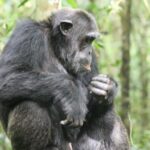
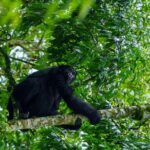
The payoff is the hour you’re allowed with the chimpanzees after locating them. That hour is usually why people book Kibale. It’s not just the sighting; it’s watching how they move through the canopy, how they feed, and how they interact at close range while you follow your guide’s cues. Chimps are curious, and forest tracking puts you in that “real time” moment.
If you want an extra nature win that isn’t primate-centered, you’ll also go on the Bigodi swamp walk. Bigodi Wetland Sanctuary is highlighted for biodiversity, including multiple primate species. This helps your trip avoid feeling like it’s only about two large targets (gorillas and chimps). It’s also where birders can get satisfying sightings.
Two ways to see Kibale: viewpoint hike and forest time in Bigodi
One day gives you the Top of the World hike from Kibale / Fort Portal area. This is a classic Uganda choice: you get a viewpoint reward after a physical workout, and it’s best in the morning when conditions are cooler. There are two trails described—a easier one and a more challenging option—and most people benefit from choosing based on energy rather than pride.
The other day you get more “forest process” with chimp trekking and swamp walking. In my view, that pairing is exactly what makes this tour feel balanced. You’re not choosing between action and scenery. You get both: a big view hike plus quieter habitat exploration.
If you have downtime afterward, you may opt for a ride around Fort Portal, including places like Tooro Palace and the local market area. This is useful if you want a taste of everyday life between the heavy wildlife days.
A few more Kampala tours and experiences worth a look
Queen Elizabeth National Park: Kazinga Channel and crater viewpoints
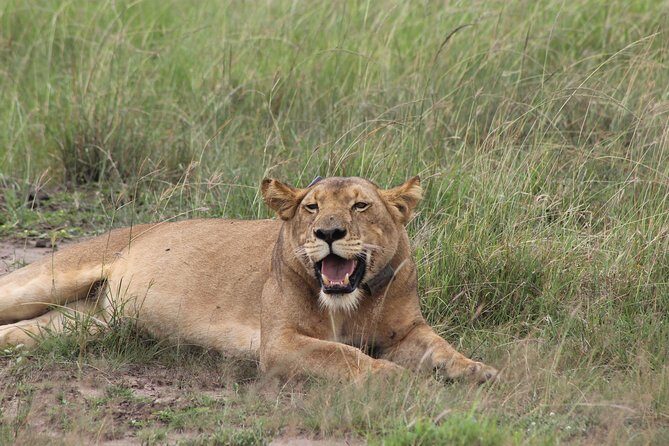
Next, the safari moves to Queen Elizabeth National Park, an area connected to lakes and the Rwenzori region. It’s the kind of park where you can see “classic” safari animals plus plenty of birds and primates. The habitat mix matters because it increases your odds across the day.
One of the best scheduled pieces here is the Kazinga Channel boat safari. The boat format is a practical advantage: hippos often spend time near the water, and crocodiles are easy to spot along the shoreline edge. You also tend to see elephants along the water areas, plus large groups of water birds. The result is that your wildlife sightings aren’t only dependent on luck while driving through grass.
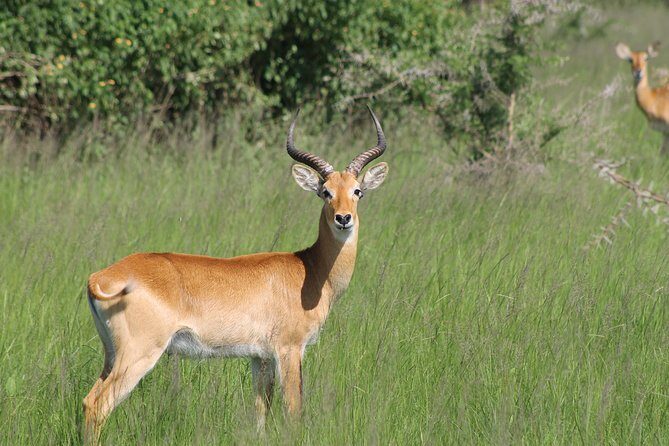
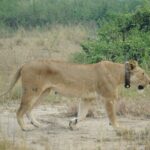
Then you’ll also do game drives, including a morning drive along areas like the Kasenyi plains. Lions, elephants, leopards (not guaranteed), Cape buffaloes, Uganda kob, and water-related species are all part of the search. That “not guaranteed” part is important. Leopards are famously tricky anywhere, and you should treat the drive as a chance to search, not a transaction.
In the afternoon, there’s the Explosion crater drive, which is described as having spectacular views and also wildlife along the way. Crater-area drives can be a good palate cleanser after the heat of midday, and it keeps the day from being one long stretch of long grass scanning.
Ishasha tree-climbing lions: the special chapter
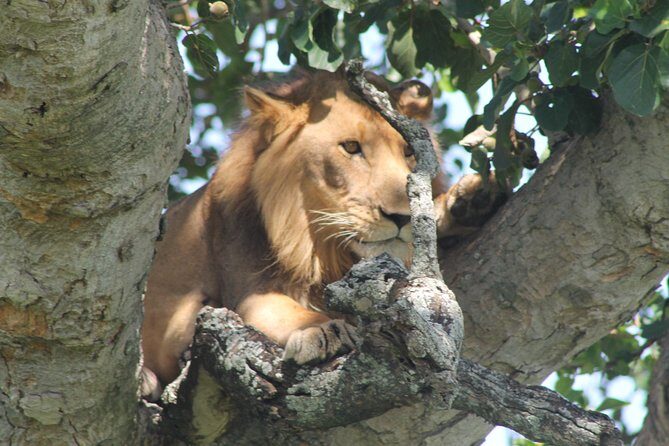
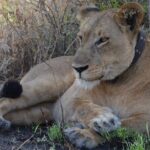
Ishasha is where the safari gets a bit more specific. You’ll spend a day in the Ishasha area known for resident tree-climbing lions. The chance is suggested around 70%, but with a clear caveat that sometimes they can be hard to spot, especially when they’re deep in grassland or resting.
That uncertainty is part of the excitement. You’re not only hoping to see lions; you’re hoping to see a behavior tied to local ecology and daily routine. If you do spot them up in a tree, it’s one of those moments that makes you stop talking and just stare.
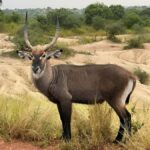
Alongside lions, the plan includes other wildlife like Uganda kob, Cape buffaloes, elephants, and warthogs. So even if the lions take their time, you’re not stuck with a single-target day.
Getting ready for mountain gorillas: Bwindi transfer and the mental switch
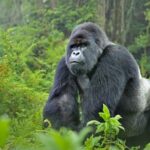
Mountain gorillas change the tone of a safari. The trip shifts toward the Bwindi Impenetrable Forest area, and Bwindi is described as hosting around 400 mountain gorillas, roughly half of the world’s population. That scale is hard to fully picture until you realize the whole experience is about forest groups that have been habituated for tracking.
On arrival in the Bwindi area, the day is lighter: you check in, relax, and prepare for tracking. That rest time matters. Gorilla trekking is physically and mentally demanding, and you’ll want your body ready for uneven terrain and a long day format.
Here’s a practical mindset I’d use: treat gorilla day as a “slow pursuit.” The goal is not to rush to a sighting. Your ranger and the group’s movements control the tempo. Comfort items and hydration matter, but your real success is calm focus.
Gorilla trekking in the forest sanctuary: what to expect up close
The gorilla tracking day is run with a ranger guide briefing first. You’ll head into the rain forest sanctuary environment, where terrain can be steep and dense, with trails that lead you through the paths the gorillas use. The time to locate a gorilla group can vary depending on where they’ve been moving.
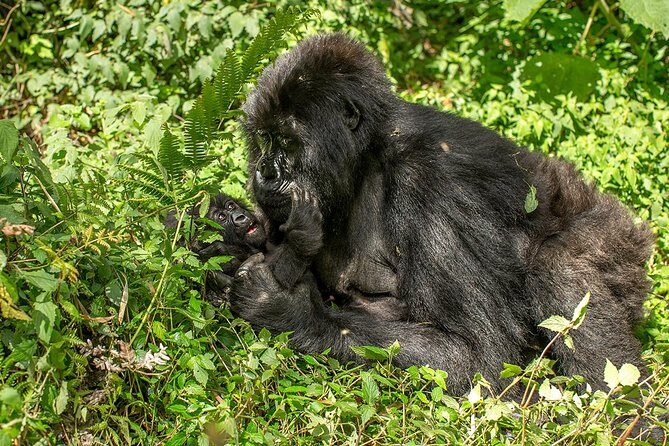
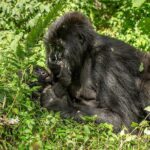
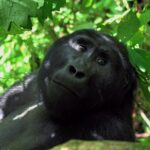
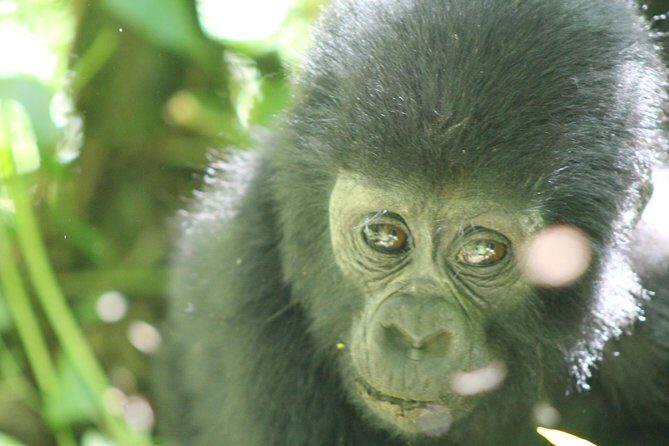
Once you find a group, you’re allowed an hour in their presence. That hour tends to be emotionally powerful because gorillas are not just “animals you saw.” They are living, breathing forest occupants with family structure and deliberate movement.
This is where the tour’s private guiding structure really pays off. When you’re in thick forest and rules matter, having someone who understands the process helps you follow cues confidently—without second-guessing what’s allowed.
Also, later in the trip you’ll have a chance to see other cultural and nature experiences in the same broader region, which makes the primate chapter feel part of a bigger Uganda story rather than a one-off spectacle.
Batwa trail and Lake Bunyonyi: switching from forest effort to lake calm
After gorilla-focused days, you’ll head to experiences around Mgahinga and then Lake Bunyonyi. The Batwa trail experience is one of the most meaningful add-ons on this itinerary. It’s explained as a way to learn about the indigenous Batwa (hunter-gatherers) and the techniques they used to survive in the forest. Now, visitors are led through the area by Batwa guides, and you learn old home survival knowledge through the trail route.
From a travel value angle, this matters because it’s not just “watching animals.” It connects the forest to human history and daily knowledge systems. It also gives you a respectful cultural layer that doesn’t require a separate trip.
Then Lake Bunyonyi slows things down. You’ll relax after the Batwa trail and spend time on and around the lake. There are options you can choose from later, including the Orugano rain forest or interaction with the Batwa community in the surrounding areas. Birders can also expect strong numbers of recorded species here.
If you like water pacing, you can opt for a canoe trek on Lake Bunyonyi to visit islands. Canoe time is a great break from vehicle travel because it forces you to experience the lake at human speed.
Lake Mburo: hyenas at dawn and hilltop views
Toward the end, you shift to Lake Mburo National Park, which has a different feel than the gorilla and chimp forests. The drive passes through terraced Kigezi hill slopes into Mbarara, then to the park. You’ll arrive in the early afternoon and have a later game viewing window.
Mburo is good for herbivore-focused wildlife watching. You can expect species like eland antelopes, zebras, topis, impalas, warthogs, Uganda kob, and Cape buffaloes. The early and late timing helps because animals move with temperature and water access.
The next morning includes a guided nature walk with an armed Uganda Wildlife Authority ranger. That ranger element is not just a formality here—it affects how the walk is structured and it adds a layer of protection in a setting where you might encounter predators like hyenas. Hyenas are mentioned as often returning to dens after being out at night, which means your timing can be part of the story.
Then you’ll go to viewpoint hills for a view over the lake and surrounding lakes—nine of the twelve surrounding lakes are mentioned as visible from the top viewpoint. That’s your final scenery payoff: a broad perspective after days of tracking on foot in dense forest and standing near rivers and craters.
Price and logistics: what you’re paying for (and what you should watch)
At $5,000 per person for a 15-day private Uganda safari, the value isn’t just the animal list. It’s the fact that your plan is built around a full circuit with transfers, accommodation, meals, and scheduled wildlife activities included. That reduces the mental load of budgeting and booking each park day separately.
You also get private guide attention throughout. That helps in real ways: it can mean better timing for game drives, smoother switching between parks, and fewer awkward gaps where you’re trying to figure out what to do next.
What to watch is the “active day” factor. Gorilla tracking and forest treks need stamina. If you’re sensitive to long drives, or you want a safari that is mostly relaxed and low effort, this may feel like too much.
One more small detail: the plan says all meals are included, but drinks like premium wines and liquors might be excluded. If you drink often, you’ll want to budget accordingly.
Who this safari is best for
I’d point this tour toward three types of travelers.
- If you’re serious about primates and want both gorillas and chimpanzees in one trip, this plan is built for that.
- If you want a strong wildlife variety arc—Big Five style chances, water wildlife, crater scenery, and savanna roaming—this itinerary matches the mix.
- If you like having a guide who can adjust to your pace and interests, the private format helps.
I’d rethink it if you want a slow, lounge-heavy vacation. Uganda is rewarding, but moving between ecosystems takes energy. Also, this is not a “quick hop” safari; it’s a real expedition in 15 days.
Should you book this 15-day Uganda primate and safari circuit?
If your top priorities are gorilla trekking, chimp trekking, and a structured route through Murchison Falls, Queen Elizabeth, Bwindi area, and Lake Mburo, then this tour makes sense. The best sign is how the plan covers multiple wildlife habitats without leaving you to scramble for the basics—private guidance plus included meals and transfers.
If you’re fit enough for forest tracking and okay with early mornings, I think you’ll feel like you got your money’s worth. If you’re not, the primate days will feel heavy instead of exciting. My advice: be honest about your stamina, then book with confidence.
FAQ
What city is the safari based in?
The tour starts in Kampala, Uganda, and the meeting point listed is Entebbe Airport in Entebbe, Uganda.
How long is the safari?
It’s described as 15 days (approx.).
Is this a private tour?
Yes. It’s a private tour/activity, and only your group participates.
What’s included for meals and drinks?
All meals are included. All drinks are included too, but premium wines and liquors might be excluded.
Does the tour offer pickup?
Yes, pickup is offered.
Where does the tour end?
This activity ends back at the meeting point, which is Entebbe Airport.
What is the cancellation deadline for a full refund?
You can cancel up to 3 days in advance of the experience for a full refund. If you cancel less than 3 full days before the experience’s start time, the amount you paid won’t be refunded.