REVIEW · KAMPALA
Entebbe: Mabamba Swamp Shoebill Tracking Boat Tour
Book on GetYourGuide →Operated by NuttinTODO · Bookable on GetYourGuide
Shoebills are not your everyday bird. On this Mabamba Swamp tour from Entebbe, you’ll love the quiet canoe glide through papyrus channels and the real shot at tracking the prehistoric-looking Shoebill Stork in the wild. One heads-up: finding the right boat at the start point can be a little tricky at Nakiwogo Landing Site, but it usually doesn’t take long once you’re pointed in the right direction.
I like that the guides keep things practical and calm once you’re on the water. When Paul and Lilian are on your trip, the vibe is friendly and you get clear help on what to look for in the reeds, not just random bird spotting.
You’re also not locked into a rigid schedule. The standard trip is about 3 hours total, with room to extend if the birds are active, but that also means sightings depend on natural conditions.
In This Review
- Key things to know before you go
- From Entebbe to Mabamba Swamp: The Lake Victoria Ride
- Mabamba Wetlands and Papyrus Channels: What the Canoe Experience Really Feels Like
- Shoebill Tracking: How You Increase Your Chances (Without Stressing Out)
- More Than One Bird: What You Can Spot Along the Way
- Timing, Group Size, and Tour Length That Keeps It Worth It
- Price Check: What You’re Really Paying for at $115
- What to Bring and Wear for a Comfortable Birding Canoe
- Where This Tour Fits Best (and When It Might Not)
- Should You Book Mabamba Shoebill Tracking from Entebbe?
- FAQ
- How long is the Mabamba Swamp shoebill tracking tour?
- Where does the tour start in Entebbe?
- Do I need hotel pickup or drop-off?
- What’s included in the price?
- What time do I cross Lake Victoria?
- What bird species are likely to be seen besides the Shoebill?
- Is a Shoebill sighting guaranteed?
- What should I bring for the trip?
- What weather gear should I consider in rainy months?
- Is the tour suitable for young children?
Key things to know before you go
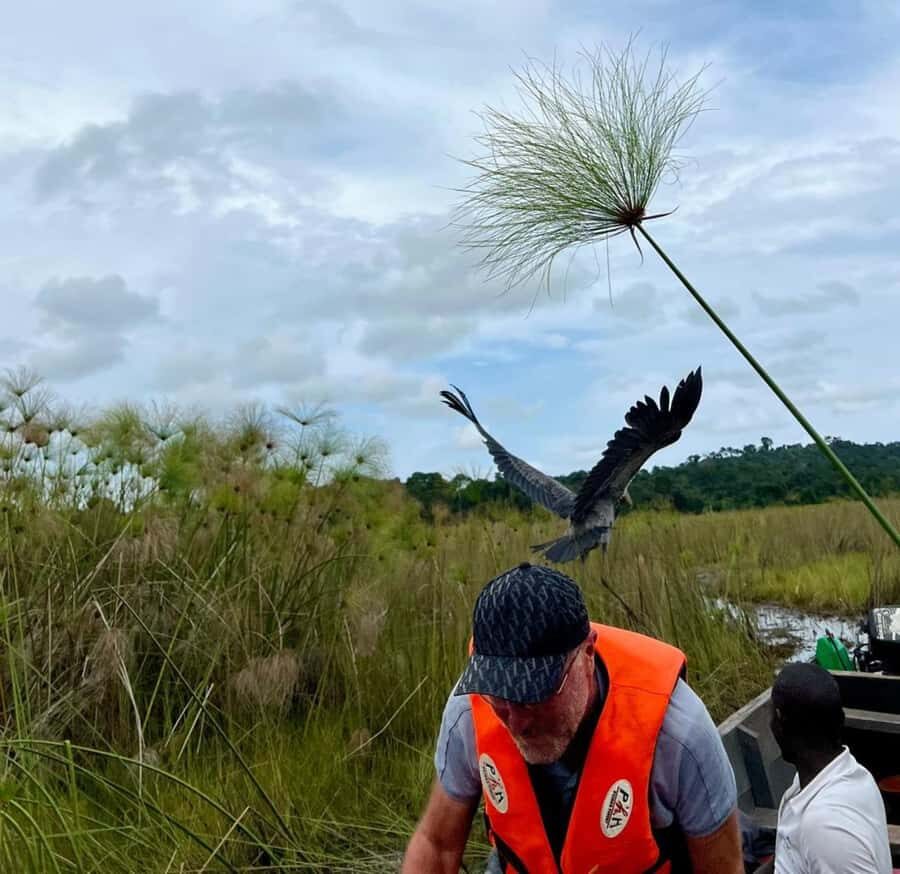
- Ramsar Wetland birding: Mabamba Swamp is a protected wetland known for outstanding bird life
- Canoe channels, not open water: you move through narrow papyrus-lined channels where patience pays
- Shoebill tracking is the main event: the goal is a rare, globally threatened stork
- 200+ bird species nearby: you’re not only waiting for one bird
- Small group size: limited to 10 participants, so the guide can actually manage sighting spots
- Chance-based wildlife: Shoebill sightings are not 100% guaranteed
From Entebbe to Mabamba Swamp: The Lake Victoria Ride
Your day starts at Nakiwogo Landing Site in Entebbe. This is also where the ferry that goes to Kalangala docks, so you’ll want to confirm you’re at the correct landing/boat spot before you crowd around the water’s edge.
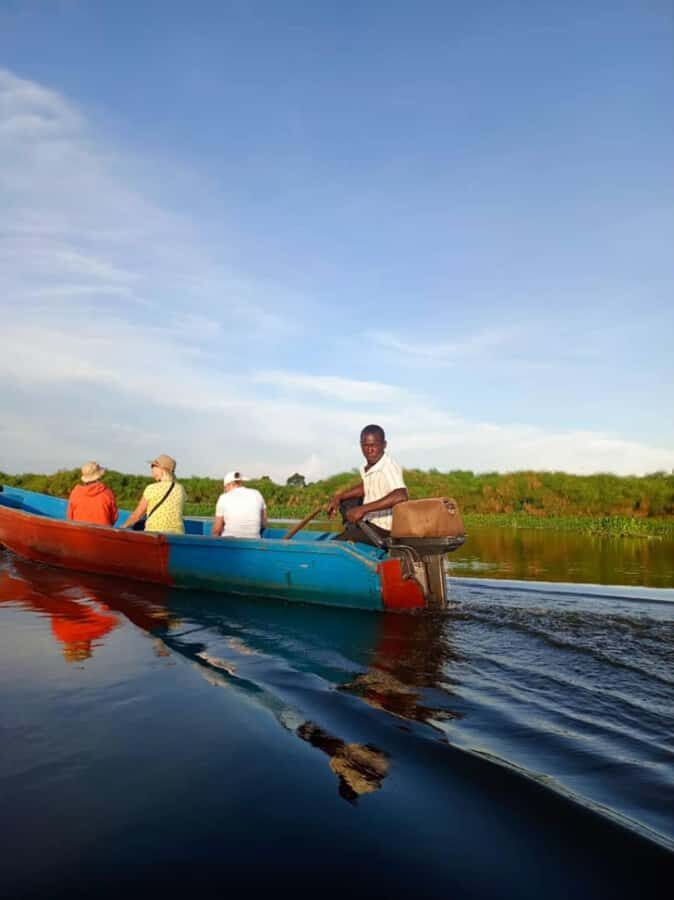
From there, you cross Lake Victoria by motorized canoe. The crossing is about 45 minutes, which is long enough to get a feel for the lake and short enough that you’re not bored before the birds even show up.
I actually think this ride is part of the value. It’s scenic, it gets you moving into the right habitat, and it gives your guide time to set expectations before you hit the swamp’s tighter, slower waterways.
You can also read our reviews of more boat tours in Kampala
Mabamba Wetlands and Papyrus Channels: What the Canoe Experience Really Feels Like
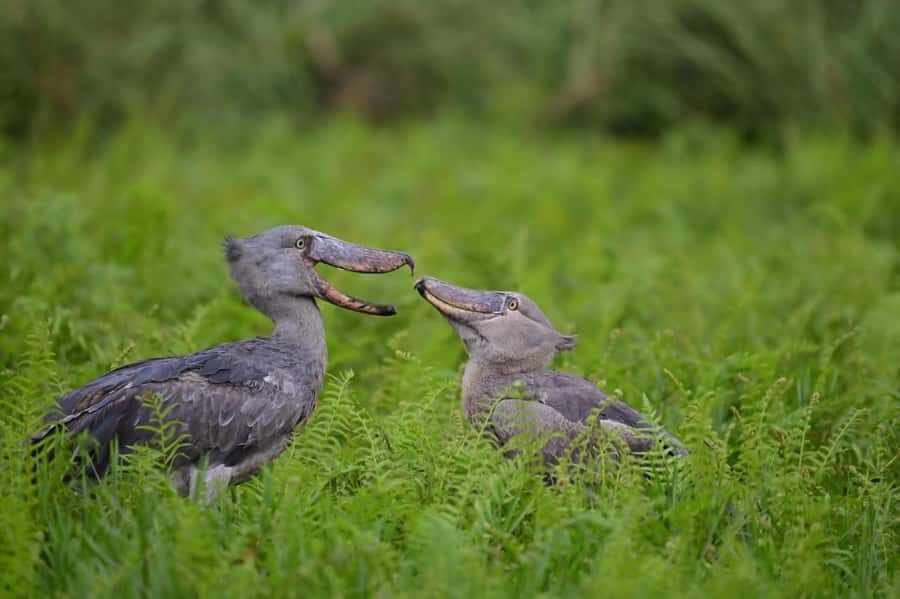
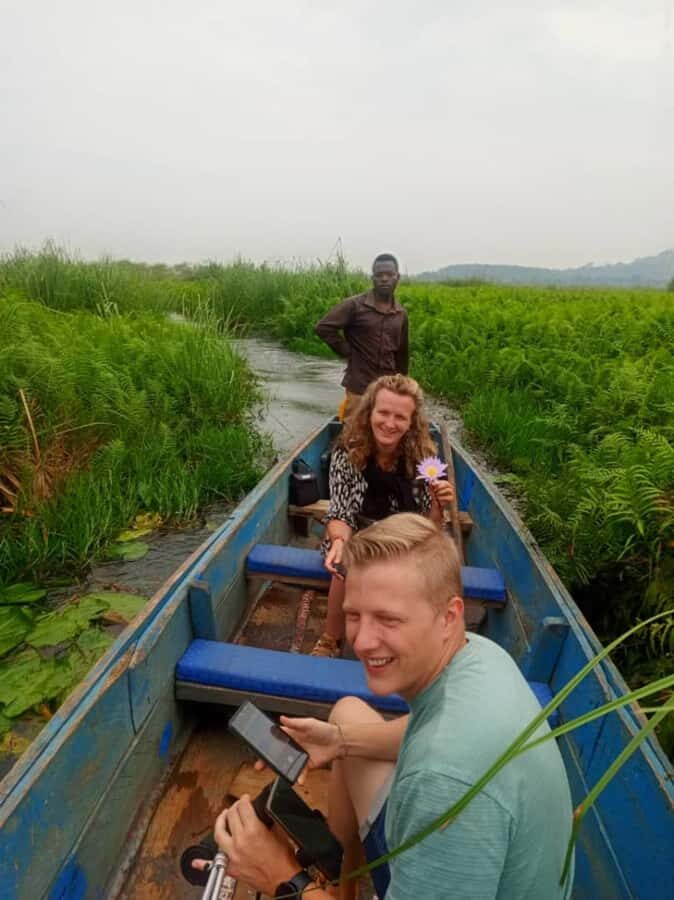
When you reach Mabamba, the vibe changes fast. You shift from open-water movement into narrow water channels lined with papyrus reeds, where visibility and bird behavior matter more than speed.
This is the kind of place where being quiet helps. A lot of the action happens close to the reed edges, and the guide’s job becomes reading the water, scanning for movement, and knowing where a long-necked bird might be holding still.
You’ll also get life jackets and bottled drinking water, which helps you stay comfortable while you do the slow work of wildlife watching. You don’t need to be an ultra-serious birder to enjoy it, but you do need to be willing to slow down. This trip rewards people who can sit calmly and check the reeds like they mean it.
A practical note: the swamp waterways can feel tricky at first, especially if you’re not used to small boats. Take a steady stance, keep your essentials in hand (camera, phone, repellent), and avoid sudden movements when the canoe shifts.
Shoebill Tracking: How You Increase Your Chances (Without Stressing Out)
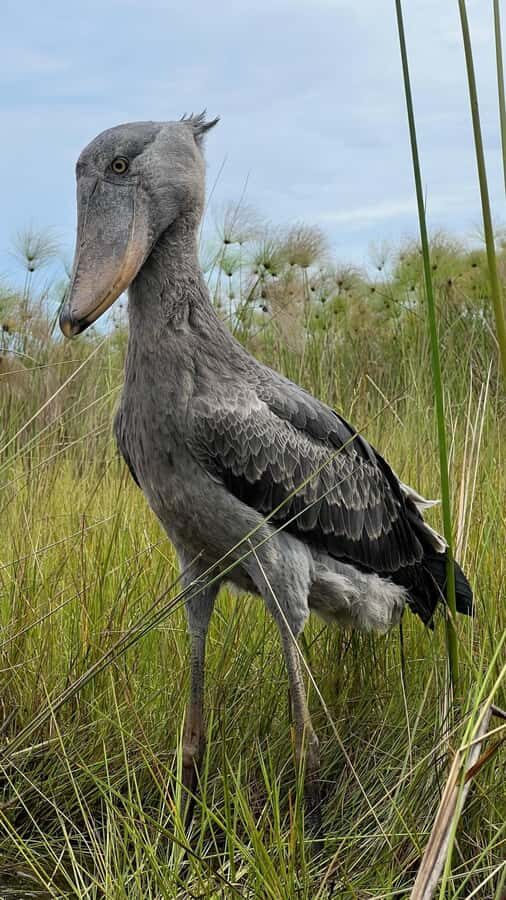
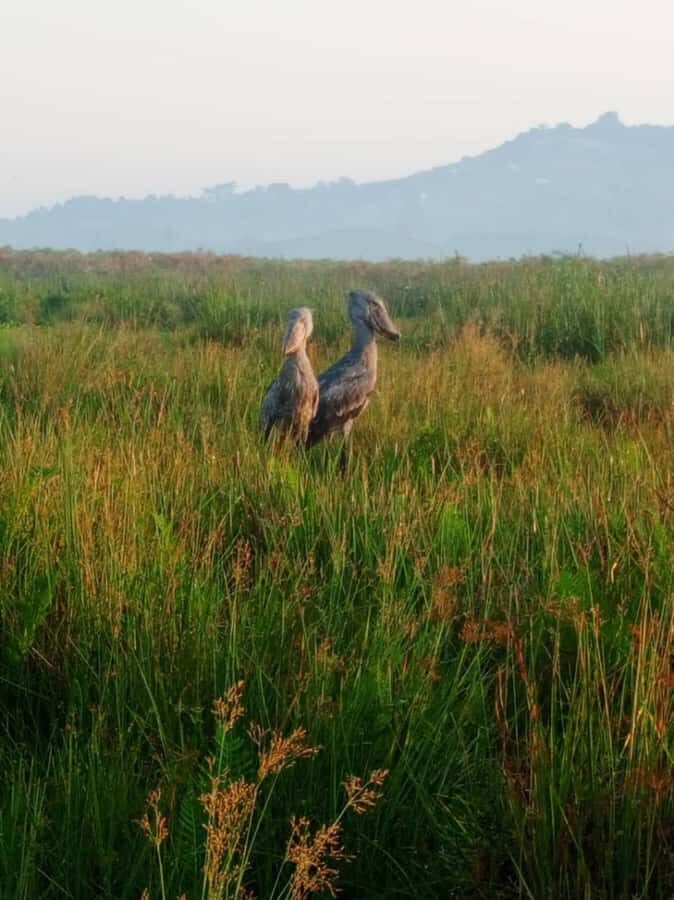
The Shoebill Stork is the star, and you’ll spend time trying to locate it in its natural habitat. It’s described as elusive and prehistoric-looking, and that fits how people experience it here: you’re watching for a bird that may appear suddenly and then stay still for long stretches.
So how do you increase your odds during the tracking time?
First, listen to your guide’s scanning rhythm. The best moments often come when you’re told to stop searching broadly and focus on a specific reed line or water edge. If you’re constantly moving your eyes everywhere, you’ll miss the quiet cues like posture changes or subtle head motion.
Second, be ready for a sighting to be brief. When Shoebills do show, you might get time for a photo or two rather than a long performance. I recommend keeping your camera accessible and your settings ready before your eyes lock onto something.
Third, remember the big truth: Shoebill sightings are not 100% guaranteed. That’s not a marketing dodge; it’s real wildlife. Natural conditions affect whether a bird is active, visible, or willing to come out in the open.
One more tip from what I’ve learned about trips like this: patience is not passive. You’re not waiting around doing nothing. You’re watching closely, adjusting your focus as the guide points, and staying calm when the bird doesn’t appear on your first glance.
More Than One Bird: What You Can Spot Along the Way
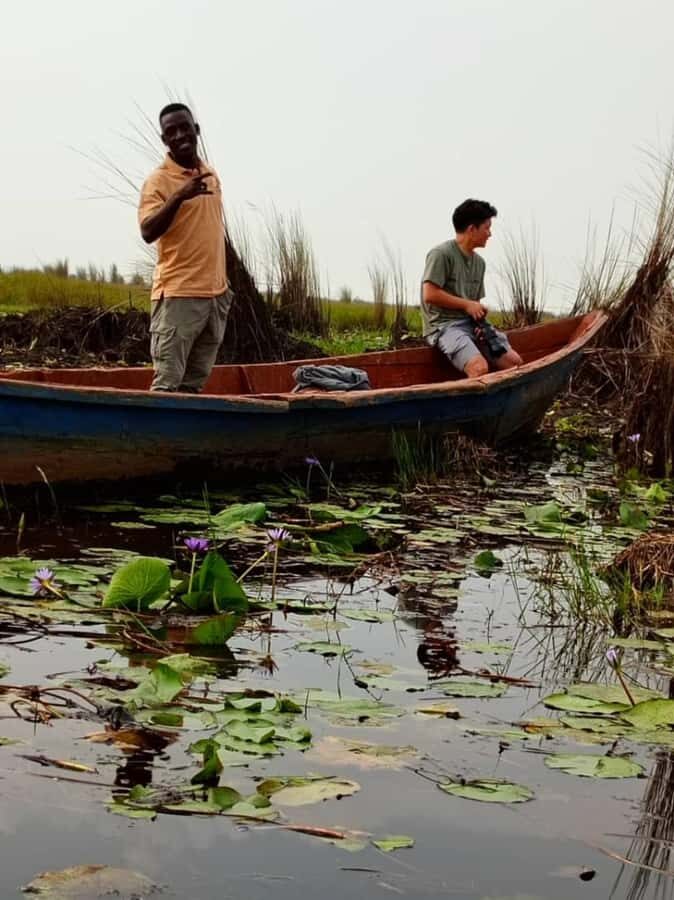
Even if the Shoebill takes its time, you won’t be stuck staring at empty reeds. Mabamba is known for over 200 bird species, and the swamp gives you a whole menu of possibilities.
Some specific birds mentioned include:
- African Jacana (often seen around aquatic vegetation edges)
- Malachite Kingfisher (a flash of color and fast movement)
- Blue-breasted Bee-eater (watch for movement and perching patterns)
The real benefit here is mental. If you came for the Shoebill and feel anxious waiting for it, you can still get steady rewards from other sightings. That makes the experience feel less like a gamble and more like genuine birding.
Also, the guide’s role matters a lot. When someone like Paul or Lilian is watching with you, you’re less likely to miss birds just because you didn’t know where to look first.
For photography, think of this as shooting through a “nature blind,” not a clean open-air viewing platform. Reeds can block your line of sight, so aim for moments when the guide shifts position or when the bird steps into a better viewing gap.
Timing, Group Size, and Tour Length That Keeps It Worth It
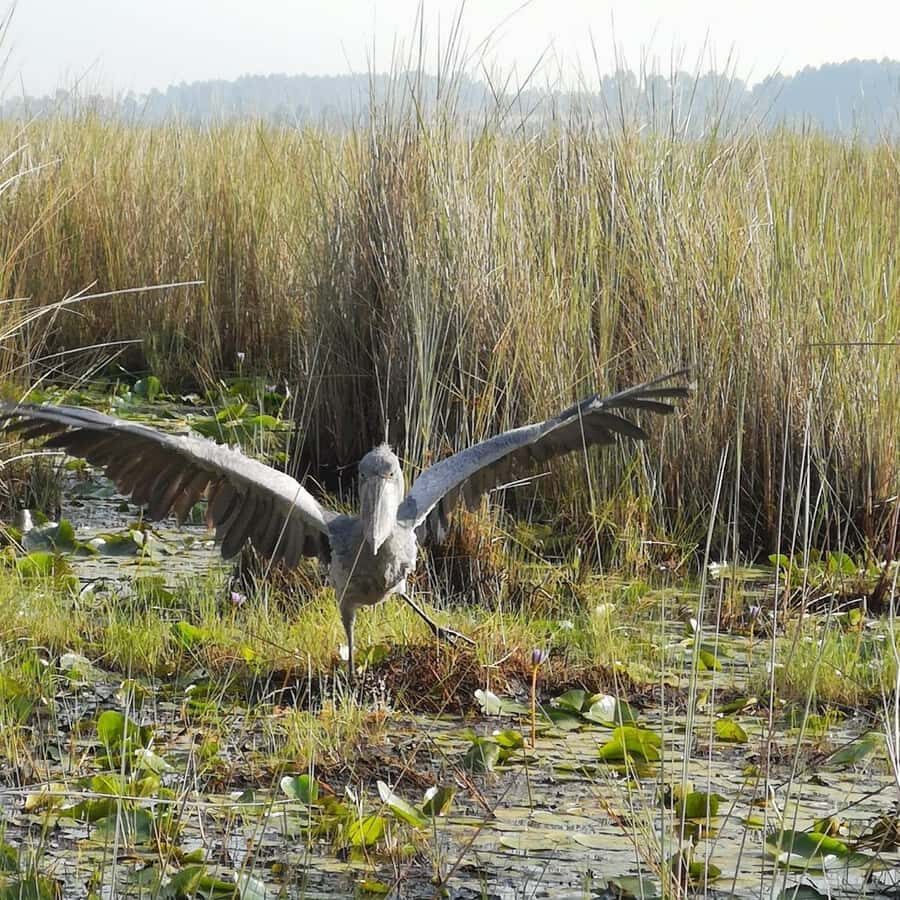
The standard trip runs about 3 hours total, including transit. That’s a smart length for most schedules: long enough to cross Lake Victoria, get into the swamp, and do real tracking, but not so long that the day disappears.
You also have a practical advantage: the tour duration can be extended based on bird activity or guest requests. That matters because birding is not a factory process. If the action is happening, you don’t want to be forced to leave right when the guide’s attention is locked in.
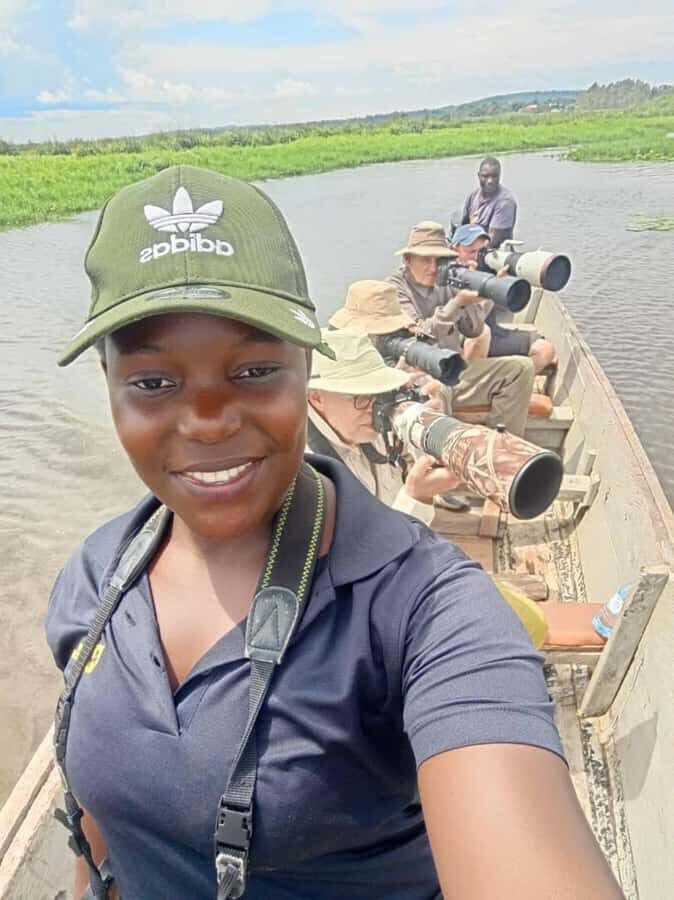
Group size is limited to 10 participants, which is key. In small groups, the guide can manage where people sit, how everyone scans, and how quickly you reposition for sightings. In bigger groups, everyone crowds forward, you get fewer good views, and the birds don’t care that you paid.
The tour is also run with an English live guide. That’s useful for two reasons: you get the bird ID help you want, and you understand what the guide is asking you to do next as conditions change.



Price Check: What You’re Really Paying for at $115
At $115 per person, this isn’t a budget filler. But it also isn’t just “pay for a boat ride.” The price includes:
- boat transfer from Entebbe (Nakiwogo) to Mabamba and back
- a local bird guide
- Shoebill tracking time
- life jackets
- bottled drinking water
For birding fans, you’re paying for two high-value ingredients: specialized guiding in a specific wetland and access to habitat that’s not easily self-navigated. Also, Shoebill viewing is the kind of wildlife experience where your “value” depends on skill and timing, not just luck.
Is it worth it? For me, it’s a yes if you want a focused, guided wildlife outing and you’re in the Entebbe area for a short window. If your goal is only casual sightseeing with no patience for tracking behavior, you might find it better to spend less time on a single target bird and do something more flexible.
What to Bring and Wear for a Comfortable Birding Canoe
What you wear here affects your whole trip, because you’re in sun, wind, and possibly wet conditions from the lake side and the wetlands side.
Bring:
- a hat
- camera
- sunscreen
- insect repellent
- long-sleeved shirt
- water (even though water is included, having extra helps)
- comfortable layers you don’t mind getting a little dusty
For clothing, go light but long-sleeved. You’ll be happier if you protect your arms and neck, especially in warmer months and during brighter lake glare.
During the rainy season (listed as March–May and October–November), waterproof gear or a poncho is advisable. Even if it doesn’t rain hard, you can still get misty conditions.
And one rule to remember: no smoking. It’s an easy one, and it also keeps the air clear for everyone.
Where This Tour Fits Best (and When It Might Not)
This trip is ideal if you:
- want serious time in a known birding hotspot
- care about the rare Shoebill Stork and the reed-edge habitat it uses
- prefer a small group with a guide who can help you scan efficiently
- enjoy calm wildlife watching more than fast, urban-style touring
It’s not suitable for children under 5 years. That’s a hard limit, and it also makes sense given the canoe time and the attention required for spotting birds safely.
If you hate waiting or you need nonstop action, you might find the tracking portion emotionally slow. That’s not a fault in the tour; it’s how wetland birding works. You’re there because the habitat rewards patience.
Should You Book Mabamba Shoebill Tracking from Entebbe?
If you’re choosing one wildlife experience to focus on in the Entebbe area, I’d take this seriously. The combination of small-group guiding, access to Mabamba’s papyrus channels, and a real plan to track the Shoebill Stork makes the $115 price feel more like a targeted safari-style day than a casual outing.
Book it if:
- Shoebills are on your bucket list
- you’re okay with wildlife uncertainty
- you can handle 3 hours outdoors with sun and possible insects
Skip it or rethink it if:
- you need guaranteed wildlife sightings (this isn’t that kind of trip)
- you’re uncomfortable in small boats or don’t want a calm, patient pace
- you’re traveling with a child under 5
If you do book, do the simple prep right: wear long sleeves, bring repellent and sunscreen, and arrive ready to slow down. That’s the difference between just seeing reeds and actually getting into the experience.
FAQ
How long is the Mabamba Swamp shoebill tracking tour?
The standard duration is about 3 hours, including transit time.
Where does the tour start in Entebbe?
The meeting point is Nakiwogo Landing Site in Entebbe.
Do I need hotel pickup or drop-off?
No. Hotel pickup/drop-off is not included.
What’s included in the price?
The tour includes boat transfer to and from Mabamba Swamp, a local bird guide, Shoebill tracking, life jackets, and bottled drinking water.
What time do I cross Lake Victoria?
You cross Lake Victoria by canoe for about 45 minutes before reaching the swamp.
What bird species are likely to be seen besides the Shoebill?
You may also see birds such as African Jacana, Malachite Kingfisher, and Blue-breasted Bee-eater, among others.
Is a Shoebill sighting guaranteed?
No. Shoebill sightings are not 100% guaranteed due to natural conditions.
What should I bring for the trip?
Bring a hat, camera, sunscreen, water, long-sleeved clothing, and insect repellent.
What weather gear should I consider in rainy months?
In rainy season (March–May and October–November), it’s advisable to bring waterproof gear or a poncho.
Is the tour suitable for young children?
No. It is not suitable for children under 5 years.