REVIEW · KAMPALA
Steve Kampala Walking tours (Airpals Safaris tour)
Book on Viator →Operated by Free Guided Walking Tours Kampala. · Bookable on Viator
Kampala isn’t a museum city. It’s a living place, and this walking tour gives you a fast way to understand it. You cover education, markets, neighborhoods, and major monuments in a half-day loop, with time built in to shop and look out over the city from a hilltop.
I love the small group size capped at 10. It makes the walk feel personal, and it helps your guide tailor pacing when people have different energy levels. I also like the mix of stops: markets plus monuments, so you get both day-to-day city life and the political story behind Kampala.
One thing to keep in mind: the tour is listed at about 4 hours, but you’re walking for much of that time. If you prefer long, slow explanations or lots of sitting breaks, some parts (especially markets and commutes) may feel more like moving through scenes than lingering in one place.
In This Review
- Key things to know before you go
- A half-day Kampala plan that actually gives you bearings
- Makerere University to Katanga Slum: education, then everyday life
- Bagala Craft plus Nakasero Market: souvenirs and a quick taste of the food scene
- Independence Monument and Temple SSDM Shree Sanatan Dharma Mandal: politics, identity, and architecture
- World War II Memorial, the Old Taxi Park, and Owino Market chaos
- Namirembe Kathedrale hill views, then the second part toward Kasubi
- Guides on the ground: Steve, Getrude, Ben, and what to expect from the style
- Price and value: what $28 buys you in Kampala time
- Who this walking tour fits best—and who should think twice
- Practical planning tips for a smooth Kampala walk
- Should you book Steve Kampala Walking tours (Airpals Safaris tour)?
- FAQ
- How long is the Kampala walking tour?
- What does the tour cost?
- How many people are in the group?
- Where does the tour start?
- Where does the first part of the tour end?
- What places does the tour include?
- Are there admission tickets required at the stops?
- Is this tour available in the morning or afternoon?
- Are service animals allowed?
- What’s the weather and cancellation rule?
Key things to know before you go
- Max 10 people: a true small-group feel, not a big bus crowd.
- Free entry stops throughout: the itinerary marks admission tickets as free at each stop.
- Bagala Craft shop time: a focused moment to pick up souvenirs in Kampala.
- Hilltop panorama at Namirembe Kathedrale: city views that help the geography click.
- A mix of “old Kampala” and modern commutes: taxi park chaos, then monumental history.
- Two-part ending points: the first part ends at Namirembe Cathedral, with a second part at Kasubi tombs.
A half-day Kampala plan that actually gives you bearings
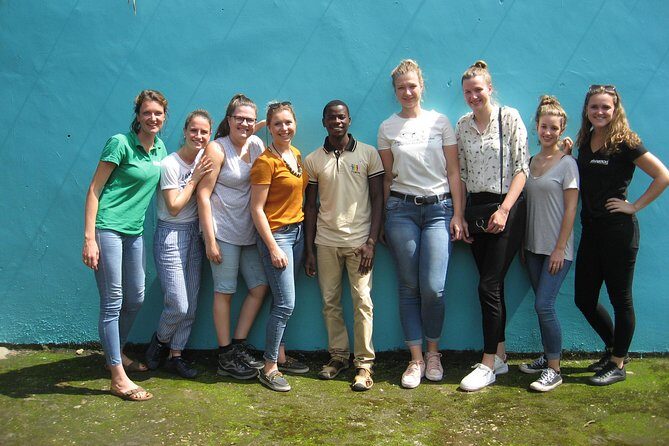
Kampala can feel like a swirl when you first arrive. This tour helps you get your bearings fast by walking through key areas in one organized arc, rather than trying to piece it together with taxis and guesswork.
The format matters. You’ll start at Makerere University main gate and move from place to place with a guide who connects what you’re seeing to Uganda’s wider story. And because it runs in either the morning or afternoon, you can fit it into your schedule without losing an entire day.
Also, the mobile ticket approach is practical. You show up with your confirmation and ticket on your phone, which cuts down friction when you’re meeting your group.
You can also read our reviews of more walking tours in Kampala


Makerere University to Katanga Slum: education, then everyday life
The tour opens at Makerere University, walking through the university area from the main gate. Even if you’re not visiting as a student, this stop helps you understand Kampala’s role as an education center and a place where ideas and institutions matter.
Then you shift to Katanga Slum, where the walk is meant to give you a broader perspective on how different people live in the city. This kind of stop is never just sightseeing. The point is to replace stereotypes with direct observation, and to hear the context behind what you’re seeing.
How to make this section work for you: stay respectful, keep your camera questions in check, and come ready to ask basic “what does this mean” questions. In this kind of neighborhood visit, your attitude matters as much as your curiosity.
Bagala Craft plus Nakasero Market: souvenirs and a quick taste of the food scene
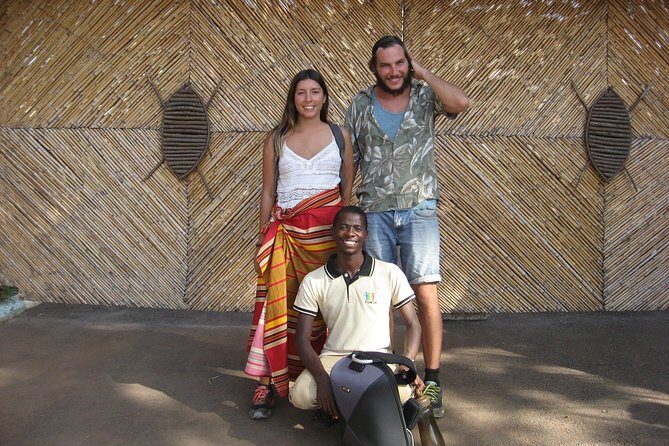
Next comes Bagala Craft, described as the biggest craft market in Kampala. You get around 20 minutes of shopping, which is just enough time to browse, compare items, and leave with something real without turning the tour into a full-on market marathon.
After that you head to Nakasero Market, where there’s an opportunity to taste and observe different fruits. That’s a smart move for a half-day walking tour: it adds a sensory break, and it reminds you Uganda isn’t just cities and monuments—it’s agriculture feeding daily life.
A small practical note: markets can get busy, and you’ll be moving in a group. If you want photos, do it efficiently and stay close so you don’t lose the rhythm of the walk.
Independence Monument and Temple SSDM Shree Sanatan Dharma Mandal: politics, identity, and architecture
At Independence Monument, the tour is designed around a short history lesson. You sit down and learn about Uganda before and after independence, plus why the monument matters. Even if you studied Uganda before, this stop tends to make the timeline feel less abstract—because you’re standing in Kampala at a physical marker of national identity.
Then you visit Temple SSDM Shree Sanatan Dharma Mandal to see the beauty and architecture of the temple. This adds a different lens to your Kampala understanding: not only political history, but also how faith and community shape what you see in the city.
If you like places that tell multiple stories—architecture, religion, and history—this pairing works well. It also breaks up the heavy walking energy so your brain can reset.
World War II Memorial, the Old Taxi Park, and Owino Market chaos
The World War II Memorial stop is brief but focused: you learn how Uganda participated, and you also hear about both positive and negative results. This is useful because it goes beyond generic war remembrance. You see how global events landed locally, and how Kampala’s story connects to larger forces.
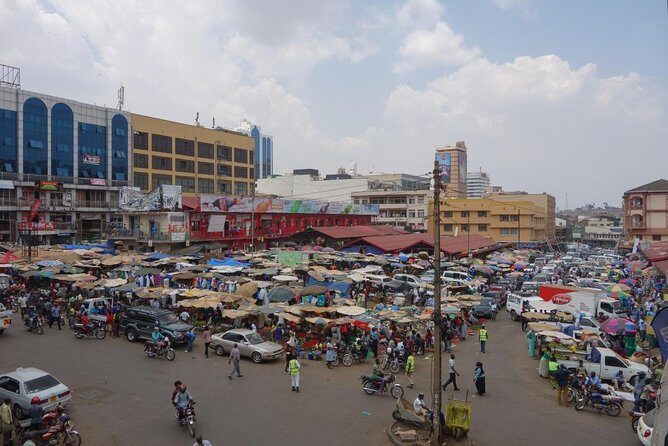
Then comes Kampala Old Taxi Park, the kind of place that makes you understand traffic and transport as a social system. The idea here is simple: you’ll observe thousands of commuter taxis concentrated in one spot. It’s organized chaos, and the guide’s job is to help you interpret what you’re seeing so it doesn’t just feel noisy and random.
Finally, you reach Owino Market, described as the biggest market in Kampala. This is where the tour leans into everyday commerce—especially second-hand clothes and all sorts of goods. It’s a striking contrast to the monument stops, and it can be emotionally grounding because markets are where money, survival, and creativity collide.
Quick tip for this stretch: keep an eye on where your group is moving. With transport hubs and big markets, wandering even a few steps can mean you miss the guide’s explanation.
Namirembe Kathedrale hill views, then the second part toward Kasubi
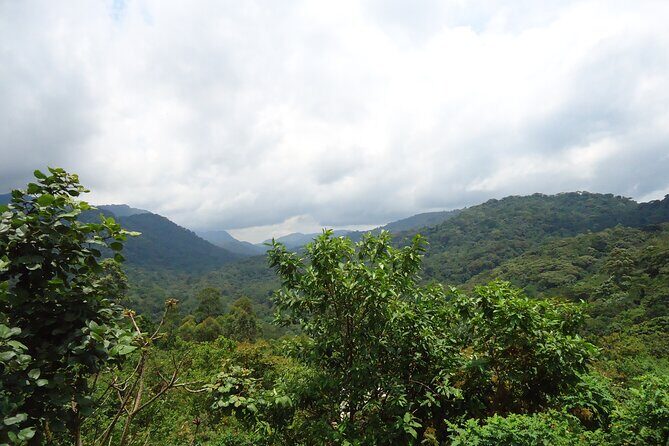
The tour ends its first stretch at Namirembe Kathedrale, on a hill with great city views. This is a powerful waypoint because it turns your walking route into something you can mentally map. From higher ground, you start to understand which areas are central, how routes connect, and why certain areas feel busier than others.
After Namirembe, the tour information indicates a second part that ends at Kasubi tombs. Even though the exact details of that portion aren’t spelled out in the stops list here, the key point for you is timing and geography: the day is built to transition from central viewpoints and markets into another cultural site area.
If you want photos, Namirembe is where you should prioritize them. The view is the kind that makes your whole half-day loop feel worth it.
Guides on the ground: Steve, Getrude, Ben, and what to expect from the style
One of the strongest patterns from past experiences is the guide quality. People have praised Steve for being friendly, responsive, and careful, with guides sometimes including Getrude and Ben. The common thread is clear: guides bring history and city context into the walk, not just directions.
There are also examples of guides being flexible—helping with pacing and even offering practical advice about getting around. In one case, a guide helped with an app ride issue and waited until the transport arrived, which is exactly the kind of small support that makes a first day in a new city feel calmer.
What about style? The tour runs through a lot of scenes in a short window, and that can shape how storytelling lands. If you need an energetic, back-and-forth conversation the whole time, plan to prompt your guide. Ask questions when something interests you, especially during transitions between monuments, markets, and neighborhoods. That’s the best way to get more out of the walking-heavy format.
Price and value: what $28 buys you in Kampala time
At $28 per person for about 4 hours, you’re paying for organization, interpretation, and safe navigation through multiple neighborhoods and landmarks. The value is amplified by the fact that the itinerary marks admission tickets as free at each stop.
You also get built-in “real-life” time. Bagala Craft includes a dedicated shopping window, and Nakasero Market includes time for fruit tasting and observation. That turns your money from paying for photos into paying for guidance that helps you understand what you’re seeing and how to interact with local places appropriately.
In plain terms: if you’d otherwise spend your first day in Kampala hopping randomly by taxi, this tour can be a smart shortcut. You buy time, context, and a framework for understanding the city.
Who this walking tour fits best—and who should think twice
This tour is a great match if you’re:
- In Kampala for a short stay and want main local landmarks plus city life in one half-day
- Interested in political and historical context alongside everyday street-level experiences
- Happy walking through neighborhoods and markets with a guide who explains what matters
It may be less ideal if you:
- Want lots of museum-style time, because much of the day is movement and observation
- Have very tight scheduling after the tour, since the experience is listed as around 4 hours and you’ll be walking throughout
- Prefer a very high-energy performance style. This is a guided walk, and you may get more value by preparing your questions than expecting nonstop drama
Practical planning tips for a smooth Kampala walk
Here’s how you can set yourself up for an easy experience:
- Wear comfortable walking shoes. You’ll be on your feet for most of the tour.
- Bring water and plan for a good weather day, since the experience requires good weather.
- Expect a city-with-people pace, especially near markets and taxi areas.
- If you rely on public transport, you’re starting near public transport access, and the route includes central Kampala areas.
- Service animals are allowed, and most travelers can participate.
Also, consider meeting the group on time at Makerere University main gate. This helps you start strong and keeps the flow from getting rushed.
Should you book Steve Kampala Walking tours (Airpals Safaris tour)?
I’d book it if you want a first-day Kampala experience that mixes history, neighborhoods, markets, and viewpoints without wasting time. The small group cap of 10, the free entry stops, and the practical mix of shopping plus street-life observation make it good value for the money.
Before you go, set your expectations for a walking-first half-day. If you stay curious and ask questions when you care about something, you’re far more likely to come away feeling you truly understood Kampala instead of just moving through it.
FAQ
How long is the Kampala walking tour?
It’s listed as approximately 4 hours.
What does the tour cost?
The price is $28.00 per person.
How many people are in the group?
The group is capped at a maximum of 10 travelers.
Where does the tour start?
The start meeting point is at Makerere University main gate in Kampala, Uganda.
Where does the first part of the tour end?
The first part ends at Namirembe Cathedral (Namirembe Kathedrale area).
What places does the tour include?
The itinerary includes Makerere University, Katanga Slum, Bagala Craft, Independence Monument, Nakasero Market, Temple SSDM Shree Sanatan Dharma Mandal, World War II Memorial, Kampala Old Taxi Park, Owino Market/Kampala, and Namirembe Kathedrale.
Are there admission tickets required at the stops?
The itinerary lists admission tickets as free for the included stops.
Is this tour available in the morning or afternoon?
Yes. You can choose between morning and afternoon tour options.
Are service animals allowed?
Yes, service animals are allowed.
What’s the weather and cancellation rule?
The experience requires good weather. If canceled due to poor weather, you’ll be offered a different date or a full refund. Free cancellation is available up to 24 hours in advance for a full refund.