REVIEW · KAMPALA
Kampala boda boda tours [motorbike tours].
Book on Viator →Operated by Kampala City and Slum Tours · Bookable on Viator
Kampala feels like a movie from the back of a boda boda. This tour is built for getting your bearings fast on Uganda’s capital streets, with an experienced English-speaking rider guide, safety-checked bikes, and a helmet handed to you before you set off. I like that you cover big-name landmarks in one day, and you don’t arrive hungry thanks to a Kampala street-food snack (Rolex) included in the price. One heads-up: two major stops have entrance fees you pay on arrival—Gaddafi National Mosque ($8) and Kabaka’s Palace/Lubiri ($10)—so budget a bit extra.
My other strong point is the mix: you see formal places of worship and royal Buganda sites, then you swing through everyday Kampala at Kalerwe Market and Owino Market. In one 6 hours 50 minutes ride, you get the city’s contrasts—hills, towers, palaces, markets, and views—while staying in the hands of the tour provider (Kampala City and Slum Tours). The main trade-off is that the schedule is tight, so you’ll want to keep your expectations practical and go with the flow.
In This Review
- Key things I’d tell a friend before booking
- Boda Boda orientation: why this route works in Kampala
- Price and logistics: what $40 really buys (and what it doesn’t)
- The itinerary, stop by stop: what each place adds to your day
- Stop 1: Bahá’í Temple (Bahai’i Temple) — quiet landmark, big meaning
- Stop 2: Kalerwe Market Path — see the supply chain of Kampala
- Stop 3: Gaddafi National Mosque — climb for the Kampala view
- Stop 4: Kabaka’s Palace (Lubiri) — royals, gardens, and Amin’s torture chambers
- Stop 5: Owino Market — downtown chaos, real commerce, street-level Kampala
- Rubaga Cathedral (Saint Mary’s Cathedral Rubaga) — Kampala’s seven hills landmark
- End stop: African Village craft market (Buganda Road) — shopping with a purpose
- The guides, the ride, and that Kampala feel
- Who this tour is best for (and who might want something else)
- My booking checklist: the smart details to remember
- Should you book Kampala boda boda tours?
- FAQ
- What’s included in the $40 price?
- Do I need to pay entrance fees during the tour?
- Is a helmet provided?
- How long is the tour?
- Does the tour offer pickup?
- What’s the cancellation policy and weather requirement?
Key things I’d tell a friend before booking
![Kampala boda boda tours [motorbike tours]. - Key things I’d tell a friend before booking](https://tour.uganda-guide.com/wp-content/uploads/kampala-boda-boda-tours-motorbike-tours-1.jpg)
- Helmet, hair nets, and water are included, so you start with the basics covered.
- An English-speaking rider guide helps you move through Kampala with context, not just photos.
- Entrance fees aren’t included for the mosque and Lubiri, so you’ll pay on-site (cash or card).
- Kabaka’s Palace includes Amin’s torture chambers, so be ready for a sobering historical stop.
- Markets are part of the route, including Kalerwe and Owino, where everyday life is the main attraction.
- Group size is capped at 20, which helps keep the ride organized.
Boda Boda orientation: why this route works in Kampala
![Kampala boda boda tours [motorbike tours]. - Boda Boda orientation: why this route works in Kampala](https://tour.uganda-guide.com/wp-content/uploads/kampala-boda-boda-tours-motorbike-tours-2.jpg)
If Kampala is your first stop in Uganda, getting around can feel like a puzzle—big roads, lots of activity, and landmarks that are spread out. What I like about Kampala boda boda tours (motorbike tours) is that the day is structured like a guided overview: you’re not just “doing attractions,” you’re building a mental map of the city.
The ride itself is the tool. A boda boda (motorbike taxi) cuts through parts of Kampala faster than you’d expect, especially with a driver who knows where the flow is. You’re also not stuck trying to interpret signage or negotiate directions on your own. Instead, you’re following an experienced rider guide who keeps the plan moving between stops.
Safety matters here. You’re given clean helmets and hair nets, and the tour describes the bikes as safety-checked and certified. That’s a big deal because you’re riding in real traffic, not a controlled sightseeing loop. You also get a bottle of water, which sounds small until you realize you’re covering multiple stops in a long stretch of the day.
You can also read our reviews of more tours and experiences in Kampala.
Price and logistics: what $40 really buys (and what it doesn’t)
![Kampala boda boda tours [motorbike tours]. - Price and logistics: what $40 really buys (and what it doesn’t)](https://tour.uganda-guide.com/wp-content/uploads/kampala-boda-boda-tours-motorbike-tours.jpg)
The tour price is $40 per person for about 6 hours 50 minutes. For that, you get pickup (from your hotel/home of residence), guided stops, and key rider essentials: helmet, hair net, water, and a Rolex snack. You also get a mobile ticket, which is handy if you don’t want to manage paper.
The part you should plan for: entrance fees are not included for two big sights:
- Gaddafi National Mosque: $8
- Kabaka’s Palace (Lubiri): $10
Total entrance cost for these two stops comes to $18, payable at the entrance by cash or card. If you’re budgeting tightly, factor that in before you go. If you’re trying to get maximum value, the good news is that the tour’s main “guided” time stays included even when entrance fees are extra.
Also note the tour requires good weather. If it’s canceled due to poor weather, you’re offered a different date or a full refund. That’s important in Kampala because you don’t want a rainy ride that turns your day into a struggle.
The itinerary, stop by stop: what each place adds to your day
![Kampala boda boda tours [motorbike tours]. - The itinerary, stop by stop: what each place adds to your day](https://tour.uganda-guide.com/wp-content/uploads/kampala-boda-boda-tours-motorbike-tours-4.jpg)
This is a route with clear logic. Each stop teaches you something different: religion and architecture, food and daily commerce, city views, royal history, downtown chaos, and then crafts.
Stop 1: Bahá’í Temple (Bahai’i Temple) — quiet landmark, big meaning
Your day starts with pickup and a ride to the Bahá’í Temple, described as the only Bahá’í temple in Africa. Expect about one hour here, and the admission ticket is free.
Why this stop matters: it sets a tone early. Before you hit Kampala’s noise, you have a calmer landmark where you can take in a different side of the city’s faith landscape. It’s also a smart start because the guide can orient you about Uganda’s religious diversity before you head to markets and more fast-moving areas.
What to watch for: since it’s the first stop, you’ll want to arrive ready to listen and absorb. This temple visit is less about buying and more about understanding context.
Stop 2: Kalerwe Market Path — see the supply chain of Kampala
Next you ride through Kalerwe Market, one of Uganda’s largest markets on Gayaza Road (about 5 kilometers from Kampala city center). This part lasts around 20 minutes and is free.
This market focuses on fruits, vegetables, and meat from different regions of Uganda—items mentioned include yellow bananas, matooke, cassava roots, beans, potatoes, chicken, goat meat, and fish. You’re not here for a long shopping session; you’re here to witness how Kampala gets stocked.
Why I like it: markets like Kalerwe give you a “how the city lives” moment. Even if you don’t buy anything, seeing what’s available and how vendors organize themselves helps you understand what’s really happening in Kampala beyond monuments.
A practical consideration: because it’s a market environment, you’ll want your senses switched on. You’re moving through a working place, not a staged attraction.
Stop 3: Gaddafi National Mosque — climb for the Kampala view
Then you head to the Gaddafi National Mosque, Uganda’s largest mosque and the Islamic faith headquarters in the country. Here you get about one hour. Admission is not included (listed at $8, payable at the entrance by cash or card).
The highlight is the combination of a mosque tour plus a hike to the top of the minaret/tower for a 360-degree view of Kampala. Your guide also provides detailed information about the city from up there.
This stop is a two-for-one: architecture and a city overview. From the tower, Kampala’s layout clicks into place—the hills, the spread of neighborhoods, and how the different areas connect. It’s also a good moment to ask questions because the guide can explain what you’re looking at.
Consideration: the entrance fee is extra, and the climb is part of the experience. If you have mobility concerns, think about whether you’re comfortable with a climb to a viewpoint. The good news is that the tour includes a guided experience rather than leaving you to figure it out alone.
Stop 4: Kabaka’s Palace (Lubiri) — royals, gardens, and Amin’s torture chambers
Next comes Kabaka’s Palace, also known as Lubiri, the traditional home of the king of Buganda. This is a longer stop at about two hours, and admission is not included (listed at $10, payable at the entrance by cash or card).
What’s included in the guided portion: a tour of the grand palace grounds with historical artefacts and gardens, plus a visit to Amin’s torture chambers. After that, you proceed to Kabaka’s King Lake, described as the largest hand-dug/man-made lake in Buganda Kingdom—established in 1885 on orders of Kabaka Mwanga II. The lake occupies 2 square kilometers and is estimated to be 200 feet deep.
Why this stop feels essential: it’s where Kampala’s royal identity shows up in a physical, guided way. The palace isn’t just a photo-op. You’re walking through stories—Buganda leadership, the significance of place, and also one of the darker chapters connected to Uganda’s history via the torture chambers.
A balanced way to approach it: be mentally prepared for the heaviness of that segment. The tour is not trying to sugarcoat it; it’s part of the palace visit. If you prefer lighter sightseeing, you can still go, but go knowing this portion is serious.
Stop 5: Owino Market — downtown chaos, real commerce, street-level Kampala
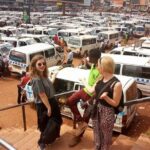
After Lubiri, you ride into the heart of the city and stop at Owino Market, famous for everything from traditional medicines to televisions, and especially secondhand clothing. The guide route also notes you can buy cloth for tailoring on-site.
This stop is about 20 minutes and free.
I like Owino because it’s the “downtown reality check.” You’ve already seen markets, but Owino is a different flavor—more crowded, more commercial, and very clearly part of Kampala’s daily rhythm. If you’re the kind of person who likes photos of people-at-work, this is where you’ll see it.
A practical consideration: this is not a quiet stroll. Expect narrow lanes and active bargaining and movement. Keeping your eyes on your guide and staying aware of your surroundings matters here.
Rubaga Cathedral (Saint Mary’s Cathedral Rubaga) — Kampala’s seven hills landmark
The tour then proceeds to Saint Mary’s Cathedral Rubaga, commonly referred to as Rubaga Cathedral. It’s described as the parent cathedral of the Roman Catholic Archdiocese of Kampala and the oldest Roman Catholic diocese in Uganda.
Rubaga Cathedral sits on top of one of Kampala’s original seven hills, and the tower is described as dominating the skyline from that elevated position.
Why it’s worth the stop: it gives your day a “city landmark” finish. You’ve done mosques, markets, royal sites, and views—then you shift to a major Christian cathedral placed in a classic Kampala topography setting. From the hill setting, the cathedral’s presence feels like a reference point for where you are in the city.
End stop: African Village craft market (Buganda Road) — shopping with a purpose
To close the day, you visit African Village craft market on Buganda Road, described as one of the best places to buy arts and crafts in Kampala and the biggest craft market in the city.
This stop is about one hour, and it’s free. After that, your riders transfer you back to your pickup point or hotel.
Why I think this ending works: it gives you a chance to bring home something tangible after you’ve seen the cultural context earlier in the route. It’s also a practical way to end—shopping time at the end of a long ride lets you slow down instead of rushing to find souvenirs before you’re done.
One caution: markets can tempt you into impulse buys. If you’re shopping, take a moment to compare items and prices rather than grabbing the first thing you like.
The guides, the ride, and that Kampala feel
![Kampala boda boda tours [motorbike tours]. - The guides, the ride, and that Kampala feel](https://tour.uganda-guide.com/wp-content/uploads/kampala-boda-boda-tours-motorbike-tours-5.jpg)
This tour is credited with getting people a strong overview of Kampala, and the guide experience is a big part of it. The tour uses experienced English-speaking rider guides, and at least one guide name that stands out from the ride stories is Francis.
What that means for you: you’re more likely to get useful explanations than a generic “here we are” approach. In a city like Kampala, context matters—especially when you’re mixing religious sites, royal history, and downtown markets in the same day.
Also, keep in mind the pace. A route like this is designed to fit multiple major areas in one long session. That’s great for orientation, but it also means you won’t have unlimited time to linger in every stop. If you want slow travel and lots of free time, this may feel a bit structured. If you want a clear plan and big variety, it’s strong.
Who this tour is best for (and who might want something else)
![Kampala boda boda tours [motorbike tours]. - Who this tour is best for (and who might want something else)](https://tour.uganda-guide.com/wp-content/uploads/kampala-boda-boda-tours-motorbike-tours-6.jpg)
I’d recommend this boda boda tour if:
- you’re trying to get your bearings quickly in Kampala
- you like a mix of formal landmarks and real daily life markets
- you want a guided ride with helmets, hair nets, and an experienced driver
- you’d enjoy a day that includes viewpoint time and city context, not just monuments
I’d hesitate if:
- you dislike motorbike rides or want a slower, more flexible sightseeing schedule
- you’d rather avoid heavier historical sites, since Kabaka’s Palace includes a visit to Amin’s torture chambers
- you’re not comfortable climbing to a tower/minaret viewpoint at Gaddafi National Mosque
My booking checklist: the smart details to remember
![Kampala boda boda tours [motorbike tours]. - My booking checklist: the smart details to remember](https://tour.uganda-guide.com/wp-content/uploads/kampala-boda-boda-tours-motorbike-tours-7.jpg)
Before you book, note these key points so nothing surprises you:
- Entrance fees to plan for: $8 (Gaddafi Mosque) and $10 (Lubiri), payable by cash or card at the entrance
- Included basics: helmet, hair net, water, and Rolex snack
- Pickup is included from your hotel/home, and the tour provides a mobile ticket
- The route is about 6 hours 50 minutes
- Group size max is 20, keeping it organized
- Expect the schedule to run best in good weather
If the weather turns poor, the tour can be canceled and you’ll be offered a different date or a refund—so keep an eye on forecasts around your day.
Should you book Kampala boda boda tours?
![Kampala boda boda tours [motorbike tours]. - Should you book Kampala boda boda tours?](https://tour.uganda-guide.com/wp-content/uploads/kampala-boda-boda-tours-motorbike-tours-8.jpg)
Yes, if you want a full-day Kampala overview that actually helps you understand the city, not just tick off photos. The value is strong because you’re getting guided movement between major sights, rider safety essentials, and a real Kampala food moment (Rolex) in one set price.
If you’re the type of traveler who enjoys structure and variety—temples, towers, royal sites, downtown markets, and crafts—this fits well. Just go in knowing the entrance fees for the mosque and Lubiri are extra, and be prepared for a tight schedule with a serious historical stop included.
In Kampala, getting around can be part of the fun—and on a boda boda with a good guide, it can also be the fastest path to feeling oriented.
FAQ
![Kampala boda boda tours [motorbike tours]. - FAQ](https://tour.uganda-guide.com/wp-content/uploads/kampala-boda-boda-tours-motorbike-tours-9.jpg)
What’s included in the $40 price?
The price includes pickup, an English-speaking rider guide, a bottle of water, a Rolex snack, and clean helmets with hair nets. It also includes visits as part of the guided route, but it does not include entrance fees for the two specific paid sites.
Do I need to pay entrance fees during the tour?
Yes. Gaddafi National Mosque entrance fee is listed as $8, and Kabaka’s Palace (Lubiri) entrance fee is listed as $10. You can pay by cash or card at the entrance.
Is a helmet provided?
Yes. Clean helmets and hair nets are included with the tour for your ride safety.
How long is the tour?
The tour duration is about 6 hours 50 minutes (approximately).
Does the tour offer pickup?
Pickup is offered from your hotel or home of residence.
What’s the cancellation policy and weather requirement?
You can cancel for free up to 24 hours in advance for a full refund. The tour requires good weather, and if it’s canceled due to poor weather, you’ll be offered a different date or a full refund.