REVIEW · KAMPALA
5 days best wildlife experience in Uganda
Book on Viator →Operated by NSHEKA AFRICAN ADVENTURES · Bookable on Viator
Kibale and Queen Elizabeth in one tight trip. That is what makes this 5-day private safari from Kampala so appealing: you get chimp trekking in the forest, then you pivot fast to classic savannah wildlife and the Kazinga Channel for hippos and crocodiles. It’s built for people who want big animal time without stitching together three separate tours.
I like two things most. First, the itinerary stacks the right wildlife formats: a ranger-led chimp search in Kibale, then game drives in Queen Elizabeth, then a boat cruise that puts you close to waterline animals. Second, I appreciate the “no surprise” approach—transport, accommodation, meals, and park-related fees are bundled, so you can spend your energy on sightings, not spreadsheets.
One drawback to plan for: it is active. Early starts are part of the deal (especially for chimps and game drives), and you’ll also do a walk at Amabere Caves. If you want a slow, lay-on-the-lodge vacation, this schedule will feel like a wake-up call.
In This Review
- Key things to notice before you go
- Kibale chimp trek and Queen Elizabeth wildlife in a single 5-day loop
- Day 1: Amabere Caves, Fort Portal lunch, then Lake Kigere viewpoints
- Day 2: Kanyanchu chimp trekking in Kibale, plus Bigodi’s boardwalk birding
- Day 3: Queen Elizabeth’s crater drive and Katwe Salt Lake’s everyday culture
- Day 4: Kasenyi game drive for lions and elephants, then the 2 pm Kazinga cruise
- Day 5: Kampala return with Mbarara lunch and the Equator photo stop
- Price and value: what $2,569 covers (and what you still need to plan for)
- Who this safari suits best—and who should consider a different pace
- How to get the best sightings on this exact route
- Should you book this 5-day Uganda wildlife safari?
- FAQ
- How long is the safari?
- Where does the tour start and end?
- What wildlife experiences are included?
- Do I need to arrange transportation myself?
- Are park fees and admission tickets included?
- What meals are included during the trip?
- What is not included in the price?
- Is this a shared tour or private?
- Can I cancel and get a refund?
- Is the tour suitable for most people?
Key things to notice before you go
- Chimp trekking begins early at Kanyanchu: you report to the ranger station in the morning and move with a guide inside Kibale Forest National Park.
- Bigodi Wetlands is a bird-and-primate side quest: you’ll walk boardwalk trails with a local guide and look for many species during the afternoon.
- Queen Elizabeth’s crater drive adds variety: the drive through volcanic craters (a 24 km circuit) breaks up the long transfer day.
- Katwe Salt Lake is more than a photo stop: you’ll see salt production using older evaporation methods and the communities behind it.
- Kazinga cruise runs at 2:00 pm for a reason: the timing sets you up for close views of animals drinking and for big concentrations of hippos and Nile crocodiles.
- Your trip is private: only your group goes with your driver guide, so the pacing and stops are less rigid.
Kibale chimp trek and Queen Elizabeth wildlife in a single 5-day loop
This is a classic Uganda mix, but the execution is what matters. You’re not only visiting two parks—you’re using each park’s “superpower” activity.
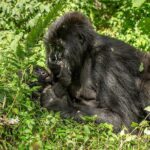
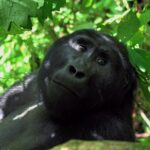
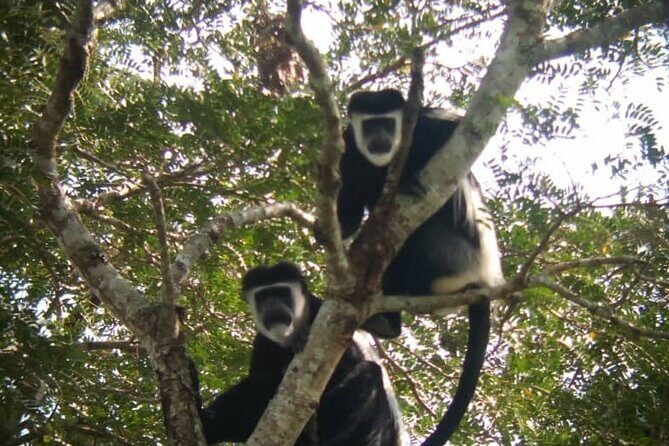
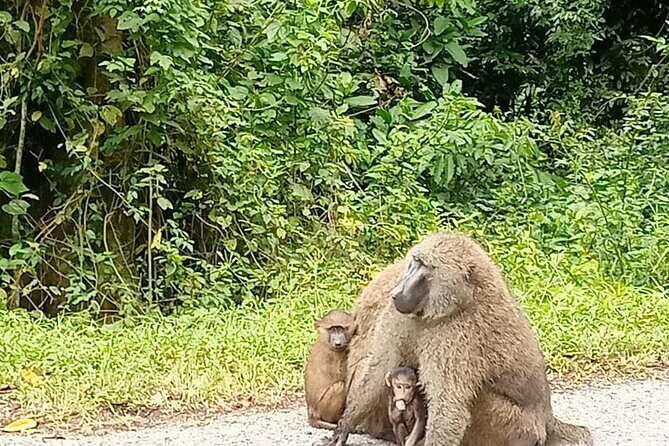
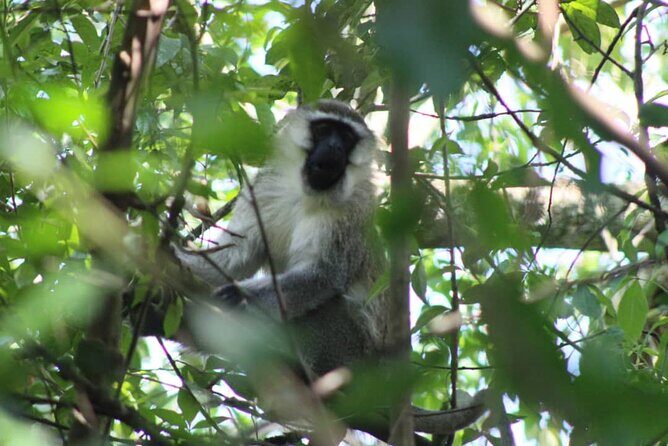
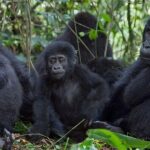
Kibale is for primates, hands down. The chimp tracking day starts with you reporting early at the ranger station at Kanyanchu Visitor Center. Then you set off into the forest with a guide and search for chimps while also keeping an eye out for other primates like colobus monkeys, mangabeys, baboons, and bushbabies. That matters because chimp sightings can be unpredictable. Your odds of seeing something interesting stay strong when the guide is actively scanning for related primate activity.
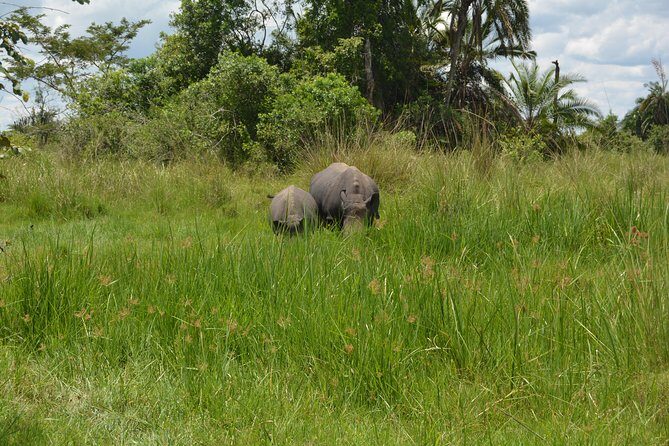
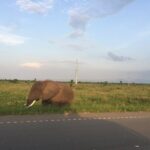
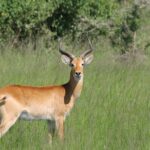
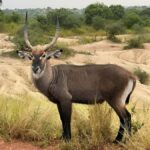
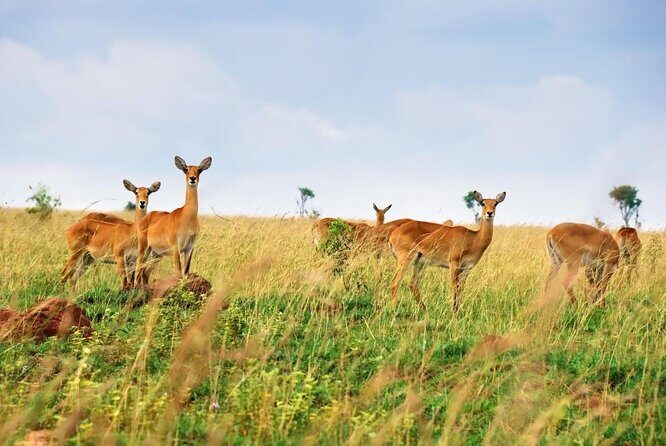
Queen Elizabeth National Park is for the safari big stuff and the scenery variety. You’ll do a game drive day (with opportunities for elephants, lions, buffaloes, waterbucks, warthogs, and Uganda kobs), and you’ll also do the water-focused Kazinga Channel cruise. If you’ve only ever seen animals from dry land, the cruise is the change of pace that often turns a good safari into a memorable one.
A few more Kampala tours and experiences worth a look
Day 1: Amabere Caves, Fort Portal lunch, then Lake Kigere viewpoints
The tour starts in Kampala with pickup, then a countryside drive that gives you a sense of how the country stretches beyond the city. You’ll also pause in Fort Portal for lunch—often a helpful reset point because it breaks up the longer transfer and gets you fed before the walking begins.
Your first actual hike is at Amabere Ga Nyina Mwiru Caves, reached via a guided walk. You’ll visit the caves and a waterfall after a short walk. This is not just a “pass-through” stop. It’s a chance to see how a landscape tourism stop can feel different from a wildlife day—cooler, quieter, and more about walking slowly and taking in the setting.
Then comes the Lake Kigere climb. You’ll go up to a small hill for views that include Lake Kigere plus Lake Saaka and Lake Nyabikere Craters in the wider view. I like this because it gives you a “looking outward” moment before you spend the next days tracking animals that are often harder to spot at close range.
Practical note: expect uneven terrain during cave/waterfall walking. It’s manageable for most people, but it’s not a zero-effort stroll.
Day 2: Kanyanchu chimp trekking in Kibale, plus Bigodi’s boardwalk birding
If chimp trekking is the reason you’re coming, Day 2 is where the payoff lives. You wake early and report to the ranger station, then track with a guide. The structure is simple but important: start early, move with direction, and let the guide’s knowledge guide your pace.
Here’s what I’d plan to notice during the walk. It’s not only about chimps. The guide is there to make your search informative, and the walk includes chances to spot other primates—colobus monkeys, mangabeys, baboons, and bushbabies—plus you’ll learn about flora and fauna in the forest. That turns the day from a one-animal gamble into a broader primate experience.
In the afternoon, you shift to Bigodi Wetlands Sanctuary. This is a guided walk in the swamp area with bird-watching as the headline. The sanctuary is described as home to 138 bird species, and the walk along boardwalk trails and viewing platforms is timed for observation. You might look for birds listed like White-spotted Flufftail, Hairy-breasted Barbet, Yellow-billed Barbet, Grey-winged Robin-chat, Superb Sunbird, and more. Even if you don’t catch the exact species name, the bird density is a big deal for anyone who likes quiet nature.
Also, Bigodi is a good “mindset day.” After the urgency of chimp trekking, this is slower and more observational. That balance is one reason this tour works well for a full 5 days without feeling like you’re sprinting every hour.
Day 3: Queen Elizabeth’s crater drive and Katwe Salt Lake’s everyday culture
Day 3 is a transition day, but it’s not a “sit in the car all day” trap. After breakfast, you drive from Kibale toward Queen Elizabeth National Park and you’ll take a scenic route featuring the Rift Valley escarpment and woodland scenery.
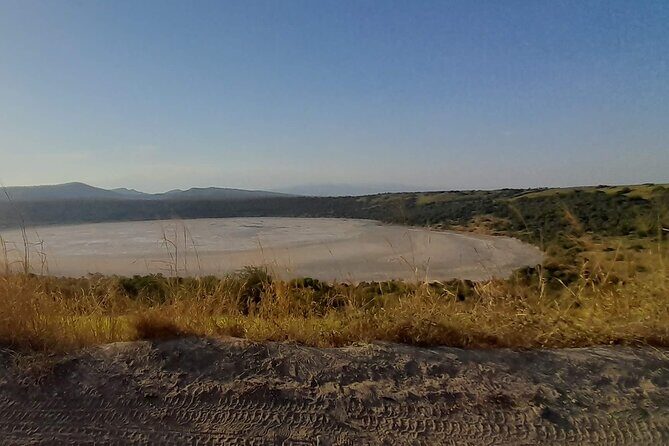
Then you get one of Queen Elizabeth’s best add-ons: a crater drive through volcanic craters. You’ll travel a 24 km loop described as extinct volcanic craters filled with lakes, forests, and savannah. This is one of those safari features that makes game drives feel more like exploring. You’re already surrounded by habitats that support different wildlife, so when you later stop for animals, the whole park context clicks faster.
After that, you continue to Katwe Salt Lake. This is where the trip adds a human-scale detail. You’ll visit the salt lake area and see how communities produce salt using old evaporation methods. It’s not a themed show. It’s a look at a livelihood that exists in the same region as the famous wildlife.
For practical value: Katwe can be a good stretching stop between park time and evening lodge time. You get a different kind of “Uganda moment,” and it keeps the trip from being only animals.
Day 4: Kasenyi game drive for lions and elephants, then the 2 pm Kazinga cruise
Day 4 is the day you should treat as your main wildlife push.
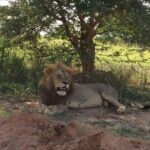
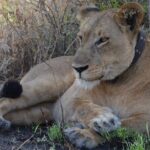
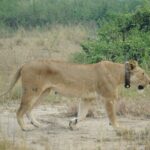
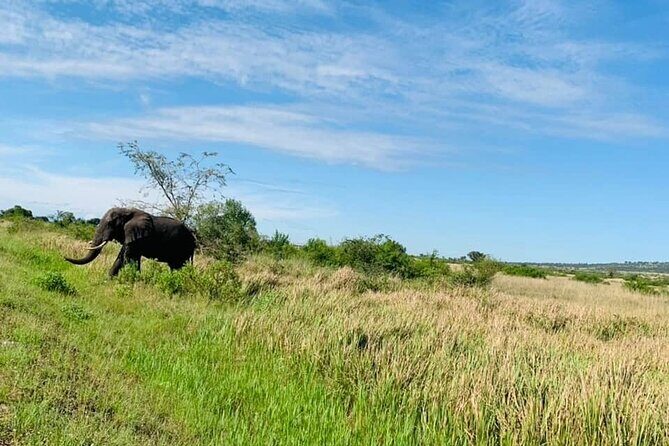
You start with an early breakfast and then head out for a game drive along the Kasenyi trail. The timing matters because animals tend to be more visible when the day is still cool and movement patterns are active. You’re set up for sightings like waterbucks, Uganda kobs, elephants, buffaloes, lions, warthogs, plus a variety of bird species.
Kasenyi is also a good place to appreciate how different species use the same terrain. For example, the same grassland/woodland mix can support big grazers and predators. If you like “reading” animal behavior, you’ll probably find yourself scanning not just for bodies, but for interactions—lions resting, herds moving, birds calling overhead.
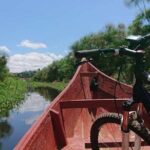
After lunch, it’s time to change perspectives with the Kazinga Channel cruise. You’ll drive to the landing site near the Mweya safari lodge, and the boat cruise is scheduled to start at 2:00 pm. The cruise runs about two hours, and the format is designed for close viewing from the water.
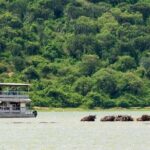
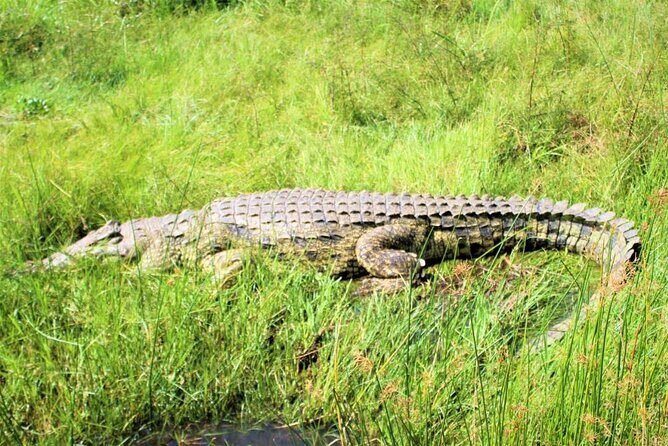
This is the day’s best “waterline” advantage: you can watch animals drinking along the banks—elephants, warthogs, buffaloes, and waterbucks—and you’ll also look for big concentrations of hippos and Nile crocodiles. Add aquatic birds like herons, fish eagles, kingfishers, hornbills, cormorants, and bee-eaters, and you get wildlife on multiple levels: shoreline mammals, submerged predators, and birds above the water.
I like that this cruise doesn’t feel like a detour. It complements the land-based game drive so you leave with two kinds of images in your camera: animals on foot and animals at the water’s edge.
A few more Kampala tours and experiences worth a look
Day 5: Kampala return with Mbarara lunch and the Equator photo stop
By Day 5, you’re done with the major safari blocks, but the day still has structure.
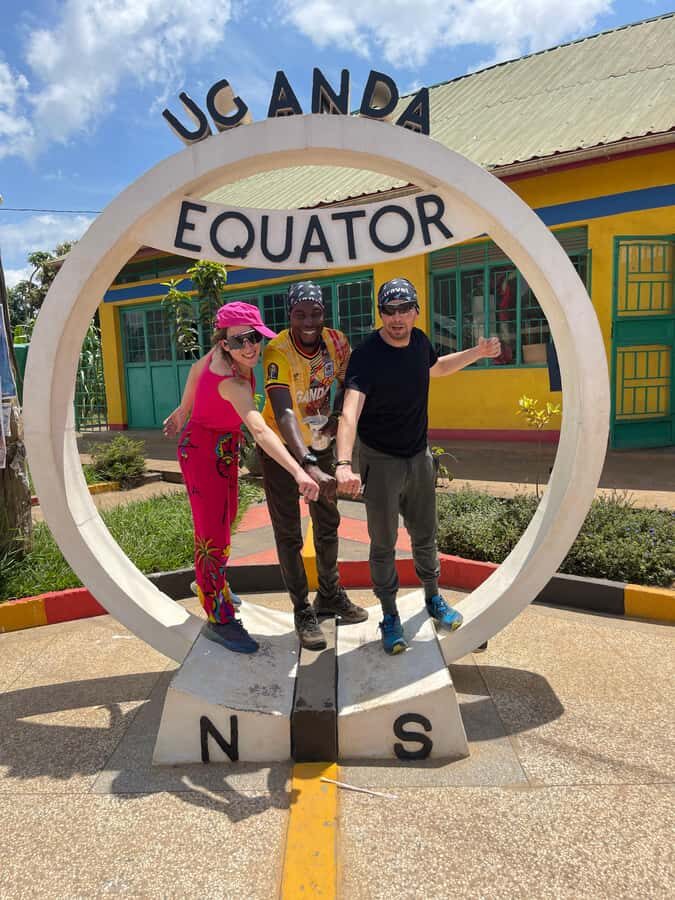
After breakfast, you check out and meet your driver guide for the transfer back to Kampala. You’ll also have a couple of stops that make the long ride feel less boring. One is Mbarara town for lunch. Another is the Equator in Kayabwe, where you can buy souvenirs and take photos.
The tour then continues to Kampala, arriving early evening. Your driver guide can drop you off at Entebbe International Airport for your departure flight, or at a place of convenience.
This ending is practical. It respects real-world logistics—your flight timing matters, and the itinerary builds in a chance to land without having to squeeze dinner plans into the last hour.
Price and value: what $2,569 covers (and what you still need to plan for)
This tour is listed at $2,569.00 per person for about 5 days, starting from Kampala. For a private safari, that price can make sense when your costs are controlled up front. The tour includes:
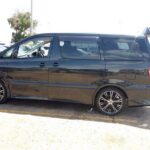
- Private transportation
- Accommodation
- All fees and taxes
- Meals: 5 lunches, 4 dinners, and 4 breakfasts
- Admission tickets for activities described on the schedule
- Pickup and transfers tied to the route
The “value” angle here is that wildlife safaris add up fast once you start counting permits, park fees, vehicle costs, and guides. This itinerary explicitly says those are covered, so you avoid the common headache of trying to figure out what extra charges might hit at the end.
What’s not included is also clearly stated:
- Alcoholic drinks
- Personal expenses
- Tips
- Visa
So I’d treat the listed price as your core safari budget, then keep a separate wallet for the extras. If you drink alcohol, factor it in early. If you plan to tip guides and drivers (common on safaris), plan that amount in advance too.
Who this safari suits best—and who should consider a different pace
This tour fits best if you want a high hit-rate wildlife plan in a compact time window.
- If chimps are on your must-do list, Day 2 is built around that experience and includes time for other primates too.
- If you like classic safari odds—elephants, lions, buffaloes, and hippos—Queen Elizabeth plus Kazinga is the right pairing.
- If you want nature plus a bit of local texture, Katwe Salt Lake and Bigodi give you more than just game viewing.
It might not be ideal if you want minimal walking or a no-early-start schedule. The chimps day is early, and the cave portion on Day 1 involves walking and climbing to viewpoints. This is an active itinerary with daily “go, see, move” energy.
Also, because it is private and only your group participates, it’s a good fit for couples and friend groups who prefer control. If you’re traveling solo, it can still work, but check how the private format affects the per-person cost.
How to get the best sightings on this exact route
You can’t force a lion onto the road or a chimp into the open. But you can stack the odds.
- Be ready for early mornings. Chimps and game drives both benefit from starting when conditions are best.
- Pay attention to your guide’s instructions during tracking. The chimp trek is ranger-guided and timed by the search process.
- Plan your energy for walking days. Amabere Caves and Lake Kigere viewpoints need a bit of stamina.
- Use the water day for patience. Kazinga is two hours on the channel. Animal movement near water can be slow, and then suddenly everything happens.
- Bring binocular habits if you bird like watching. Bigodi is described as a boardwalk setup with viewing platforms, which usually rewards careful scanning.
Should you book this 5-day Uganda wildlife safari?
Yes, if your goal is a smart, focused wildlife circuit: Kibale chimps, Queen Elizabeth game driving, and the Kazinga cruise. The biggest reasons to book are the activity mix (forest primates plus open-country safari plus water-based viewing) and the “fees and meals included” structure that keeps your budget clearer.
I’d hesitate only if you want a slow itinerary with late starts, or if you’re not interested in walking. This trip is built for people who like being outside, even when it’s early.
If you go, you’ll get the best kind of Uganda souvenir: not just photos, but a week’s worth of animal moments packed into five days.
FAQ
How long is the safari?
It’s listed as 5 days approximately.
Where does the tour start and end?
It starts in Kampala, Uganda and ends back at the meeting point. The last day includes transfer back toward Kampala and can drop you at Entebbe International Airport for your departure flight or another convenient place.
What wildlife experiences are included?
You get chimpanzee trekking in Kibale National Park, game drives in Queen Elizabeth National Park, and a Kazinga Channel boat cruise with hippos and crocodiles.
Do I need to arrange transportation myself?
No. The tour includes private transportation, including pickups and round-trip transfers along the route.
Are park fees and admission tickets included?
Yes. The tour includes all fees and taxes, and the schedule notes admission tickets included for key stops.
What meals are included during the trip?
The package includes 4 breakfasts, 4 dinners, and 5 lunches.
What is not included in the price?
Not included are alcohol drinks, expenses of personal nature, tips, and your visa.
Is this a shared tour or private?
It’s a private tour, meaning only your group participates.
Can I cancel and get a refund?
Yes. There is free cancellation, and you can cancel up to 24 hours in advance for a full refund.
Is the tour suitable for most people?
The information says most travelers can participate, but it does include activities like walking at Amabere Caves and a chimp trekking day that requires early morning and forest walking.