REVIEW · KAMPALA
Kampala Guided walking Tour
Book on Viator →Operated by KAMPALA FEMALE WALKING TOURS · Bookable on Viator
Kampala starts with a monument. In this guided walking tour, you get a fast, street-level feel for Uganda beyond the postcard—beginning at the Independence Monument and the Kabaka Muteesa 2 memorial, then moving into everyday Kampala at the markets. I especially like how the experience leans on real explanations from guides like Fridaus, who makes the stories easy to follow and the city easy to understand.
My other favorite part is the mix of stops: you’re not only looking, you’re watching how Kampala works—fruit at Nakasero Market, organized chaos at the old taxi area, and second-hand finds at Owino Market. One thing to consider: the tour price is clear, but you’ll also need extra budget for certain paid entrances, including the mosque and the king’s palace.
In This Review
- Key things I’d plan around
- Independence Monument to Nakasero Market: starting with Uganda’s big story
- From the taxi park view to Kampala City Centre: watch how people move
- Owino Market: the place to browse, bargain, and understand everyday Kampala
- Gaddafi National Mosque: a minaret climb for high city views
- Kabaka’s Palace: Buganda Kingdom context, plus the difficult lessons inside
- Other included admissions you may encounter on the route
- Price and logistics: what $30 really buys
- Practical tips to make the walk comfortable
- Should you book the Kampala guided walking tour?
- FAQ
- How much does the Kampala guided walking tour cost?
- How long is the tour?
- What is included in the tour price?
- What entrance fees are not included?
- How many people are in a group?
- Is the tour affected by weather, and when can I cancel?
Key things I’d plan around
- A compact city route that links history monuments to major markets in one walk
- City-center views from the old taxi park area and the top of the Gaddafi National Mosque minaret
- Time for real market moments—including fresh fruit browsing and shopping-style wandering
- Buganda Kingdom context at Kabaka’s Palace, plus some heavy historical stops inside the complex
- Small groups (up to 10 people) for easier conversation with your guide
- Mobile ticket delivery, so you can keep everything simple on the day
Independence Monument to Nakasero Market: starting with Uganda’s big story
The walk kicks off at the Independence Monument, alongside the Kabaka Muteesa 2 memorial. This is a strong opening because it sets the tone: Uganda’s past isn’t far away here—it’s built into the landmarks you stand in front of. You also get time to take photos at both monuments, then settle in for a sit-down explanation about how the king’s rule fit into Uganda’s path to independence.
From there, the tour shifts into daily life at Nakasero Market. This stop is practical and sensory in the best way: you’ll see the food flow of the city and get the chance to buy different fruits. If you like produce, this is the kind of place where you can spot freshness fast—like the tour’s example of avocado that’s described as coming straight from the tree. Even if you don’t buy much, it’s a good stop for learning how Kampala eats and sources food.
A small caution here is simple: markets can be crowded and busy, and you’ll likely be walking and standing for short bursts. Wear shoes you trust and keep your pace steady. The payoff is that you’re not just visiting buildings—you’re seeing the systems that feed the city.
You can also read our reviews of more walking tours in Kampala


From the taxi park view to Kampala City Centre: watch how people move
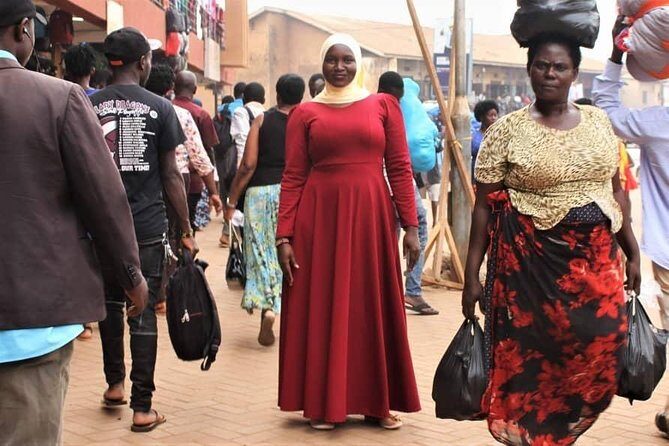
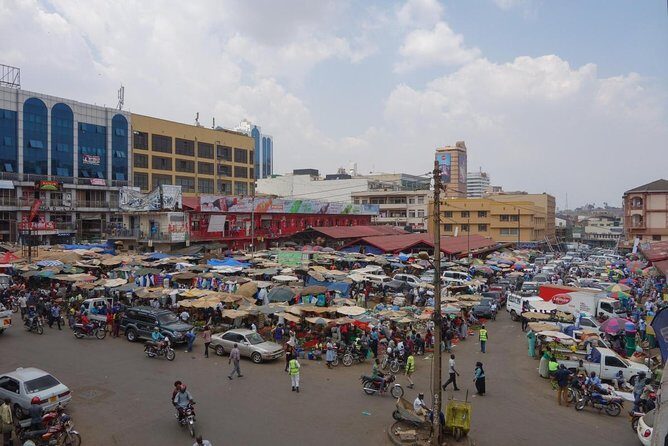
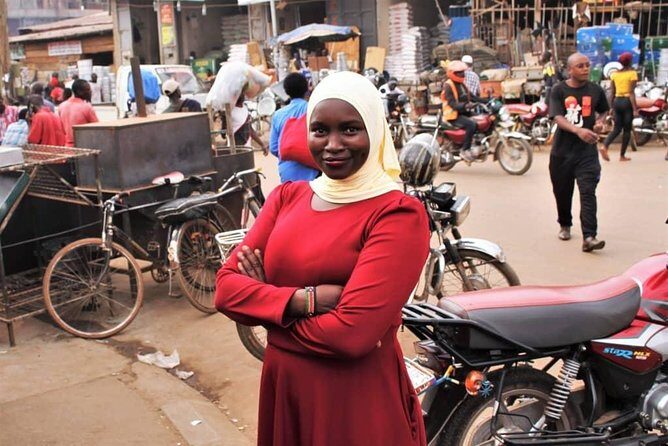
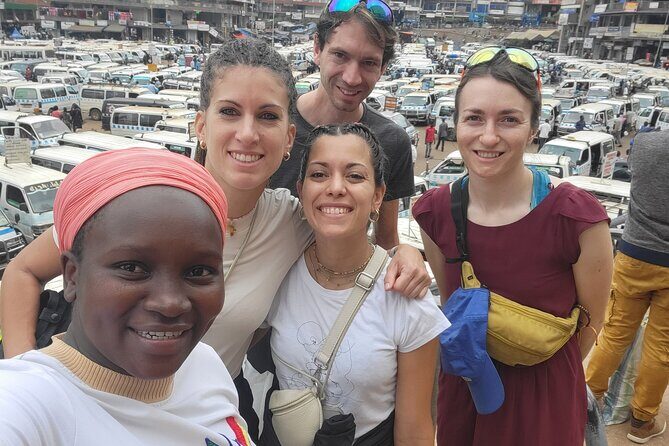
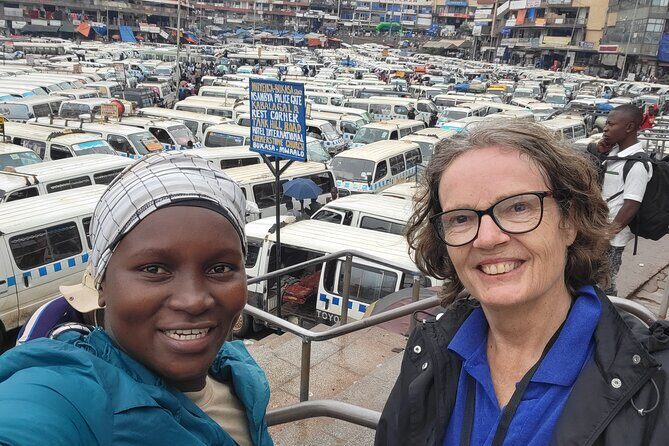
Next comes the Taxi Park, described as organized chaos. That’s the right vibe to expect. This isn’t a quiet viewpoint where nothing happens; it’s a busy transport hub where you can observe how people move to reach their destinations.
You’ll get a moment to rest from one of the buildings while getting an aerial view of the taxi park and Kampala’s city-center area. Then you’ll pass through the taxi park so you can see the flow up close. For first-timers, I love stops like this because they do something abstract guides can’t: they help you understand the rhythm of the city, the spacing, the bustle, and why locals have mastered quick navigation here.
If you prefer slow and calm sightseeing, this portion might feel intense. It’s still worth it for the perspective. Think of it as learning Kampala’s logic, not just sightseeing in it.
Owino Market: the place to browse, bargain, and understand everyday Kampala

Then the route heads to Owino Market, which is presented as the biggest market in Kampala and a favorite for second-hand items. This is a different kind of experience than the fresh-fruit stop earlier. Here, the focus is on variety and practicality: you can find items for home use, including clothing, shoes, bags, and also food.
What I find valuable about a market stop like this is the cultural signal it sends. Markets like Owino tell you what people keep and reuse, what they repair, and how the city manages “everyday needs” more creatively than big retail spaces do. Even if you’re not shopping, browsing helps you understand what’s normal here—prices, types of goods, and the way people sell and negotiate.
The one consideration is energy. Market wandering can turn into a time sink if you let it. You’ll have a set window on this stop, so I’d treat it like a guided browsing mission: decide what you want to look for (souvenirs, practical items, snacks if offered), then enjoy the search.
Gaddafi National Mosque: a minaret climb for high city views

The Gaddafi National Mosque stop is one of the most memorable in the whole loop, mainly because you don’t just look from street level. You walk up to the minaret for the best view of Kampala city, then you use that vantage point to connect the dots from earlier stops.
That last part matters. When you’re up high, Independence Monument area, the city-center movement, and the market areas start to make spatial sense. You can literally see why Kampala feels like it does: the mix of landmarks, dense activity, and the way neighborhoods press toward the center.
This stop also includes a paid admission in the tour details. The exact entrance fee is not included in the base price, so plan ahead so this viewpoint doesn’t become a surprise. And since you’ll be walking up to the minaret, keep your fitness needs in mind—this tour asks for a moderate fitness level, so choose solid footwear and don’t rush.
Kabaka’s Palace: Buganda Kingdom context, plus the difficult lessons inside

The walk ends at Kabaka’s Palace, which is tied directly to understanding the Buganda Kingdom. Uganda has multiple kingdoms with cultural leaders, and this visit helps you connect that tradition to the broader national structure—specifically, that kings are cultural leaders while also working within the country’s political system.
You’ll be asked to make payments at the visitor’s office, then you’ll take a guided tour of the palace area and several sites inside the complex, including Idi Amin’s canon and the torture chambers. This is the part where the mood can shift. These are difficult historical spaces, and they’re not the kind of attractions you treat like a casual photo stop.
I recommend going in mentally prepared to slow down. Let your guide’s pacing help you process what you’re seeing, and don’t feel pressured to force humor or “performance” at a place like this. It’s history that lands differently when you walk through it.
Also note that the palace entrance is listed as extra cost (10 dollars). If you’re trying to keep the budget tight, this is the biggest “add-on” you should plan for before you go.
You can also read our reviews of more guided tours in Kampala


Other included admissions you may encounter on the route
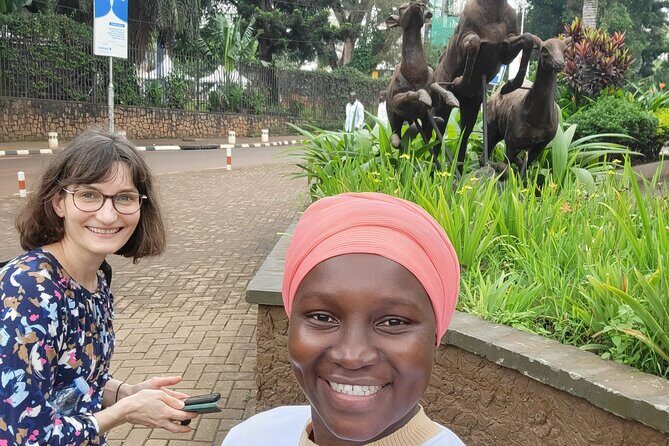
In addition to the core stops, the tour details also include admission for sites such as the National Theatre, a Hindu Temple, and Gorilla and Impala monuments. The key point for you is value: those inclusions reduce how many random entrance fees you’d otherwise be managing yourself.
Even when you’re not spending money at every corner, these added admissions help keep the walk from feeling like only markets and street viewing. You get a mix of civic spaces and cultural markers, which supports the tour’s main goal: giving you the kind of Kampala understanding you can carry home.
Price and logistics: what $30 really buys
At $30 per person, this tour is positioned as good-value city orientation. Part of the value comes from the sheer number of stops included in the walk—plus the fact that many listed admissions are marked as entry-free within the tour structure, so you’re not constantly paying at each checkpoint.
Still, it’s important to budget realistically. The Gaddafi National Mosque entrance (listed as 25,000 UGX) and Kabaka’s Palace entrance (listed as 10 dollars) are not included, so your final spend will depend on those add-ons. If you’re the type who likes certainty, check those amounts before your walk and carry what you need.
The tour also runs 2 to 5 hours, depending on pace and how your group moves through each area. That wide range is common for walking tours in active neighborhoods. If you have another appointment that same day, give yourself a buffer.
Finally, this is a small-group experience (up to 10 people) with a mobile ticket, and it’s noted as near public transportation. That combination helps you feel less stuck and more flexible if you’re pairing the walk with other Kampala plans.
Practical tips to make the walk comfortable
This is a walking tour with a moderate fitness requirement, so plan around your legs as much as the sights. You’ll cover market areas and you’ll walk up to the minaret at the Gaddafi National Mosque, and the palace complex involves movement inside a historic site.
A few practical things I’d do before you join:
- Wear shoes with good grip for market floors and sidewalks.
- Bring a light layer; city weather can shift during your 2–5 hour window.
- Keep a simple plan for money, since you’ll pay separate entrances at the visitor’s office for the palace and the mosque entry fee is listed as extra.
Also, the tour is described as requiring good weather. If rain or poor conditions show up, expect rescheduling options or a full refund depending on the provider’s handling of weather. Kampala walks are best when the ground is cooperative and visibility is decent.
Should you book the Kampala guided walking tour?
You should book if you want a real “first understanding” of Kampala. This walk connects monuments and kingdoms with the places people actually shop, travel through, and gather. The inclusion of a minaret view and the context around Buganda Kingdom make it more than a casual city stroll.
You might skip it (or choose a different format) if you strongly prefer low-walking sightseeing or if you dislike market environments. The taxi park section and market stops mean energy and crowds. And because the palace includes the torture chambers, it’s not a soft, light ending—go when you’re ready for heavier history.
My final advice: if you’re in Kampala for a short stay and you want to get your bearings fast—this is a strong way to do it, especially with a guide who can explain what you’re seeing as you move from stop to stop.
FAQ
How much does the Kampala guided walking tour cost?
The price is $30.00 per person.
How long is the tour?
The duration is about 2 to 5 hours.
What is included in the tour price?
Included admissions cover several stops such as Independence Monument, Nakasero market, Old taxi park, Owino Market, and also admission for National Theatre, Hindu Temple, Gorilla monument, and Impala monument.
What entrance fees are not included?
Entrance fees not included are the Gaddafi National Mosque fee (25,000 UGX) and the Kabaka’s Palace entrance fee (10 dollars).
How many people are in a group?
This experience has a maximum of 10 travelers (a small group).
Is the tour affected by weather, and when can I cancel?
Yes, it requires good weather. If it’s canceled due to poor weather, you’ll be offered a different date or a full refund. For cancellations, you can cancel up to 24 hours in advance for a full refund.